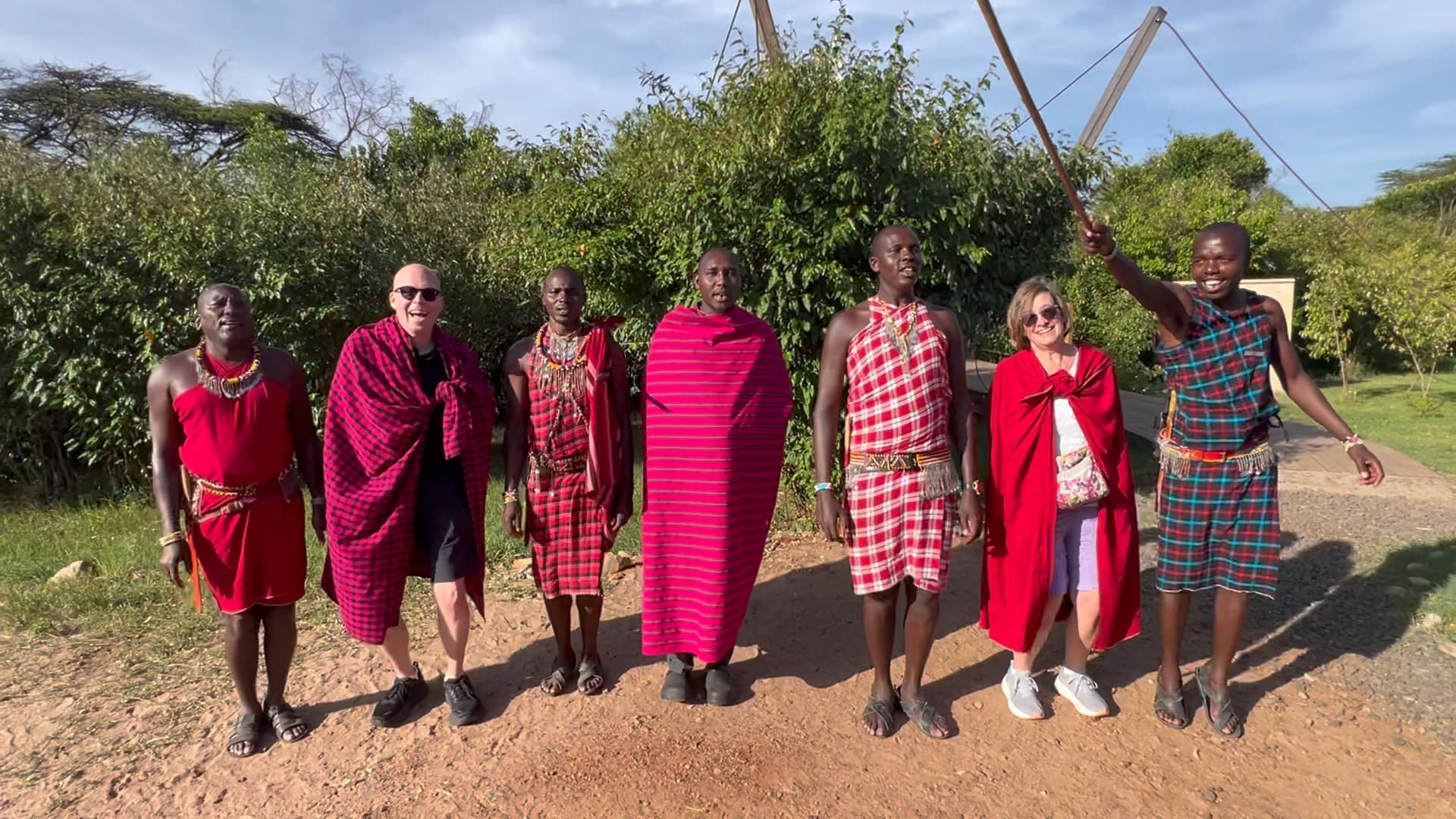
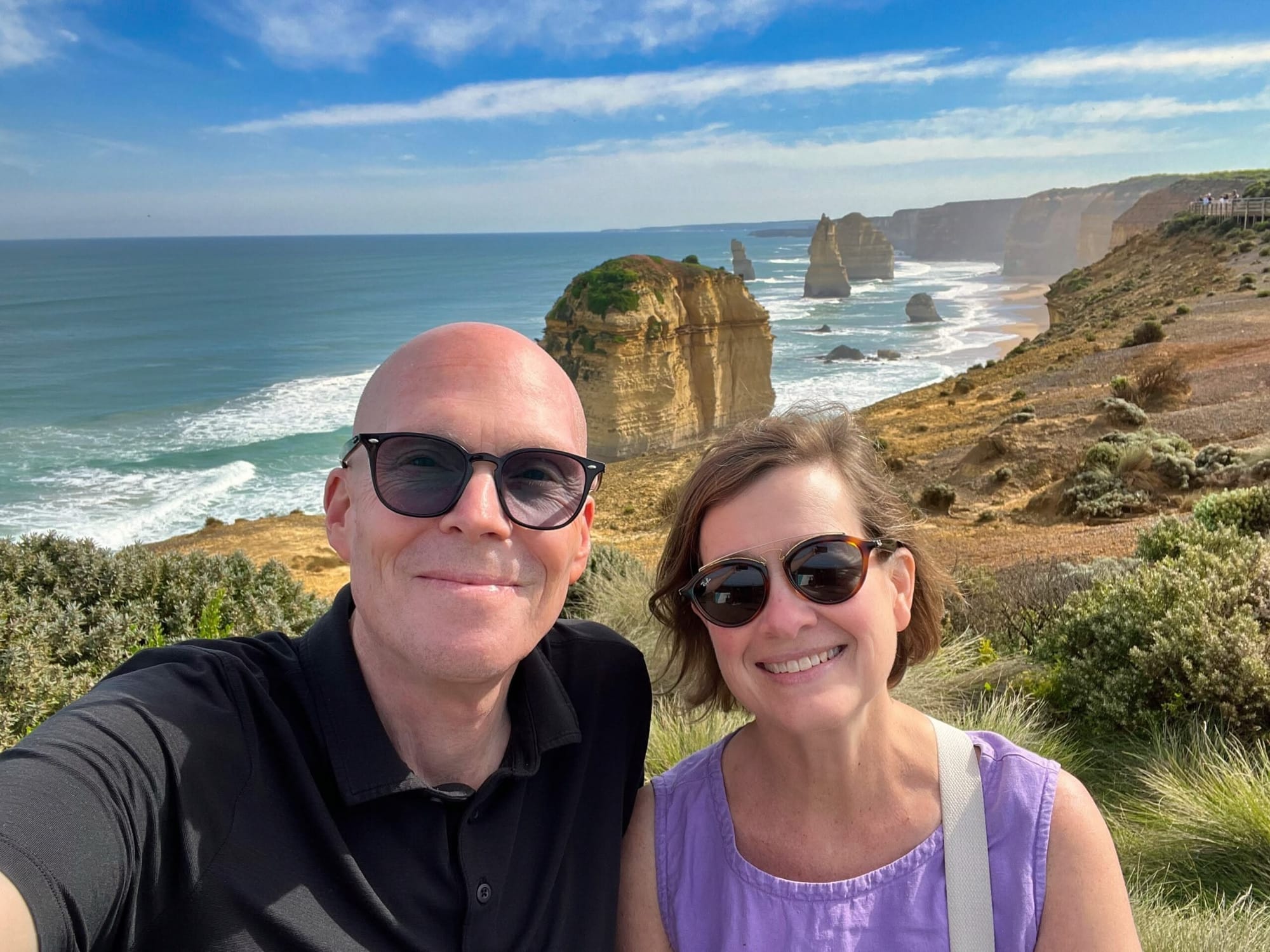
2025 - Ten Years. Still Making It Up. Still Not Going Back.
Ten years of full-time travel. 120+ countries. No plan, no endpoint, no regrets. The annual account of what we did, what changed, and why we're still going.
This life didn’t start with a plan.
We didn’t sit down ten years ago and map out a decade of movement. There was no whiteboard strategy. No long-range forecast.
It began with a moment—an inspiration—and a decision to see what would happen if we just … kept going.
What happened was ten years. Of motion. Of change. Of learning to live in uncertainty and call it home.
Ten years in, we’re still making it up as we go. And honestly? That’s half the appeal.
We’ve now spent 3,650 nights in hotels in more than 120 countries.
Some of those nights were unforgettable. Others blur into hallway carpets and buffet breakfasts. But they all add up to something: a way of seeing the world that’s no longer tied to borders, routines, or the idea of ‘going back.’
This isn’t a travel guide. It’s not a bucket list or a best-of.
It’s a look back at the rhythms, the returns, the places that shaped us—and the patterns that have only revealed themselves over time.
How We Choose Places
This question never goes away:
How do we decide where to go next?
I know that you’re used to me telling you that everything should be turned into a system. And after ten years, you’d think we’d have a system for picking destinations.
We don’t. Not really.
There’s a method, sure—but it’s more instinct than algorithm. Part emotion. Part practicality. Part mood-of-the-moment.
You might assume we just go back to our favorite places. But it’s actually the reverse—our favorite places are the ones we keep going back to.
This pattern has become clear over time.
Thailand leads with 435 days. Then Italy (170), the UK (169), Japan (154), Vietnam (131), South Korea (129), and France (106). Iceland (99) and Bonaire (98) are nearly tied. Turkey follows with 85.
It’s not a ranked list. It’s what happens when you let the road guide you. You go back, and go back again, and then you realize the place has imprinted itself on your soul. And you return yet again.
There’s no single thread. It’s life, timing, and a little bit of magic.
Why These Places Keep Calling Us Back
Every place on that list is there for a reason.
Thailand is a hub because our kids (sometimes one, sometimes both) live there. Japan drew us in early during COVID—great healthcare, high trust, and a vibe we loved.
South Korea became another refuge. We spent over 100 days there during the pandemic because they handled it better than most countries. As COVID dragged on, Iceland and Bonaire offered sanity and stillness when we needed both. We moved less. Stayed longer. Let the storm pass.
Italy? That one’s just magnetic. It’s rarely part of any greater plan, until it is. Again and again. It’s effortless to love and impossible to resist.
The UK is pure practicality. We hit our Schengen limit—90 days in any rolling 180—and jump to Scotland or England. Easiest move on the board. Never feels like a compromise.
France is always a pleasure. And Turkey? Turkey’s the wildcard. The food, the people, the terrain—it checks every box. And it’s huge. We’ll never be done.
Planning vs. Reality
We do plan. A lot, actually.
But sometimes, we miss the mark about what it is we think we’re going to want at a given moment.
We’ll book a city to scratch a culture itch—or a nature-heavy trip, assuming we’ll be craving quiet. Then the mood shifts. The need morphs. And suddenly, we’ve misread the moment.
And the places? They rarely match the vision in our heads. You think you know what you’re walking into—but the ground always shifts a little once you land. That gap between expectation and reality is half the fun.
No destination is ever a waste. Even the mismatches offer something unexpected.
This lifestyle doesn’t reward an insistence on predictability. You plan, sure—but then you surrender. Because novelty finds you, whether you chase it or not.
We toss around ideas all year. From articles, podcasts, conversations in hotel bars or a half-memory from the back seat of a taxi five years ago.
Eventually, something clicks.
Sometimes it’s curiosity. Sometimes it’s obsession. Sometimes it’s both.
Lisa’s always had a thing for Paris. I chase what’s new. That tension—that blend of comfort and discovery—is what moves us.
Something clicks—that's how the rhythm works, that’s how we know where to go.
The Big Picture
Europe? We’ve visited almost every country. Lisa’s love of history keeps us circling back. Add easy transit and open borders, and I’m along for the ride.
Same with South and Central America. We’ve covered most of it.
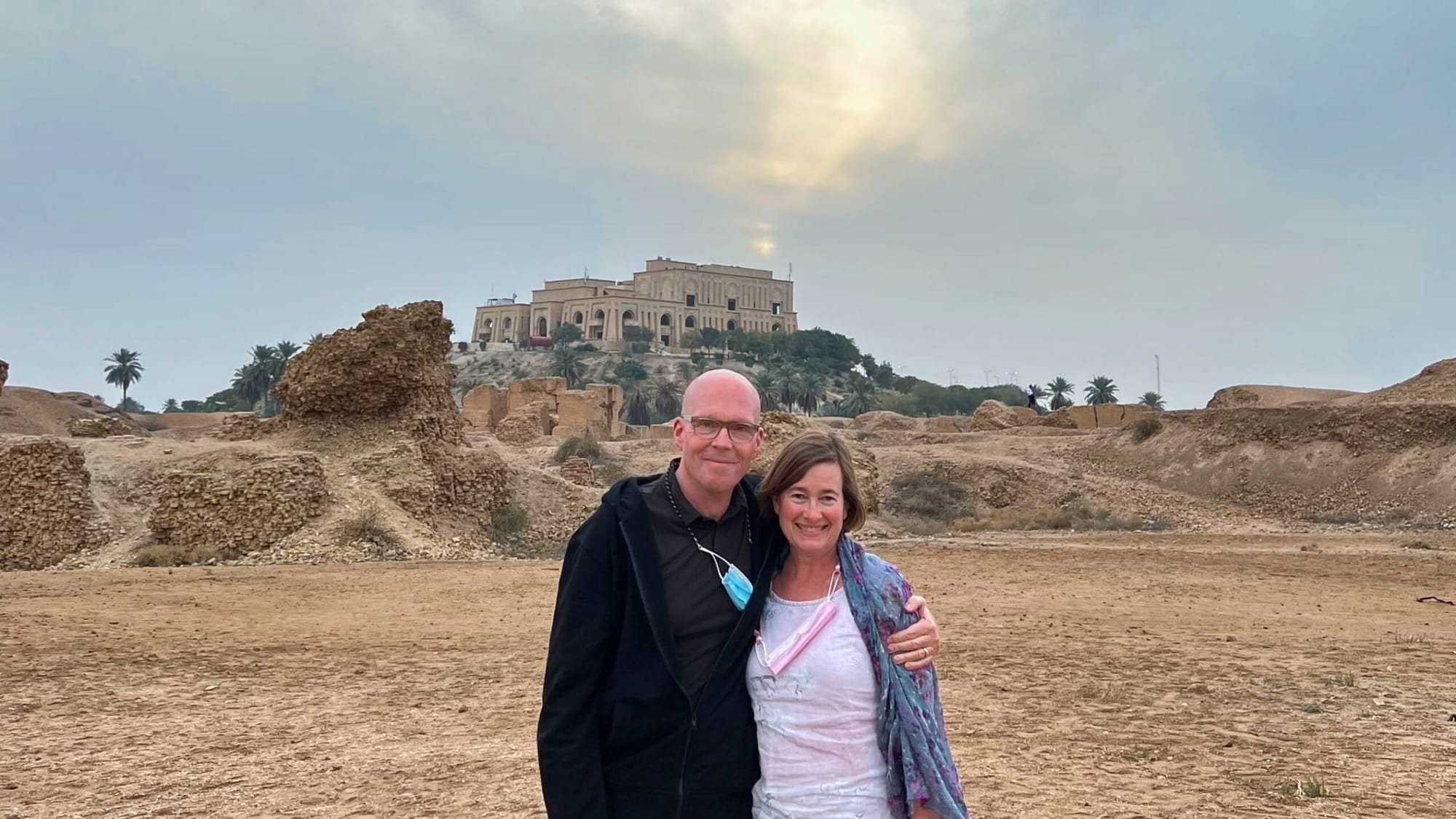
And the Middle East? Lisa again. She fell in love with the people and the food. Iraq was her idea. I might’ve pitched it eventually, but she beat me to it. Great call. It was a fantastic trip.
Asia’s been a major focus—especially the eastern and southeastern parts.
But we haven’t seen everything we want to see.
The gap? Central Asia. A few still on the list. We’ll get there.
The big blind spot? The South Pacific.
It’s not that we’re uninterested. It’s that the logistics are brutal—long flights, weird routings, unpredictable infrastructure. The timing hasn’t worked. It will.
Africa’s still unfolding. We’ve been to 15 countries. It’s powerful. Complicated. Surprisingly expensive. Sometimes overwhelming. Sometimes heartbreaking. We’ve shifted plans at the last minute—more than once—because something easier called.
We’ll be back. Just not always right away.
Where We Went
We track our year from one wedding anniversary to the next—June 23rd. That’s when all this started.
Ten years ago, on our 25th anniversary, we left for what we thought might be a short trip.
We never went back.
This year? A mix, as always.
Some stops were booked months ahead. Others fell into place at the last minute. A few ambushed us entirely.
This lifestyle doesn’t lend itself to themes, color-coded categories, or tidy conclusions.
We move based on what opens up. What calls to us. What forces our hand.
And yet—when we look back, the pattern always appears.
There’s a rhythm to the motion. A logic that only shows up in hindsight. It’s a blend of practicality, emotion, curiosity—and that familiar ‘this just feels right’ feeling.
So here’s where the year took us. What stood out. And what stayed with us once we’d packed up and left, again.
France
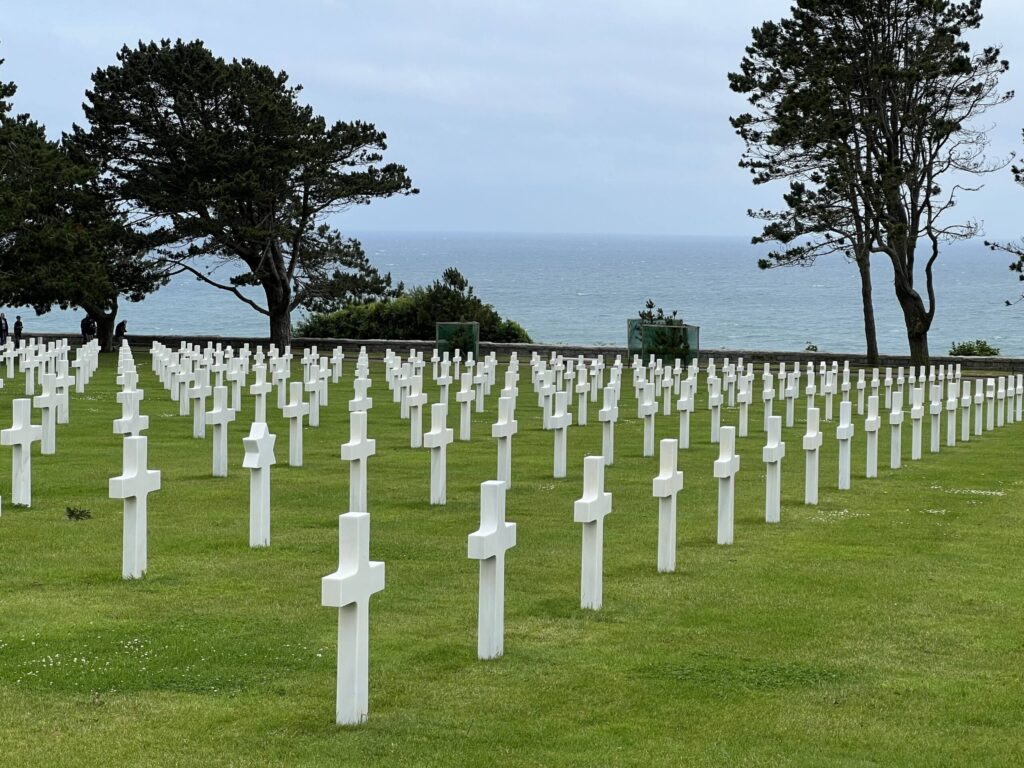
When I wrapped up last year’s post, we were in Dinan—a beautiful town in Brittany that closed our travel year on a perfect note. We spent our days wandering along the river, loading up on pastries, and exploring the neighboring towns. Normandy was just a drive away, and the whole month felt peaceful and grounded.
This year started in motion.
We passed through Paris for a single night—just long enough to hunt for cold-weather clothes. Not easy in June, but we were heading to the Faroe Islands, and most of what we owned was designed for heat, not wind chill.
Paris had just enough left on the shelves to save us from bankrupting ourselves on Faroese fleece.
Faroe Islands
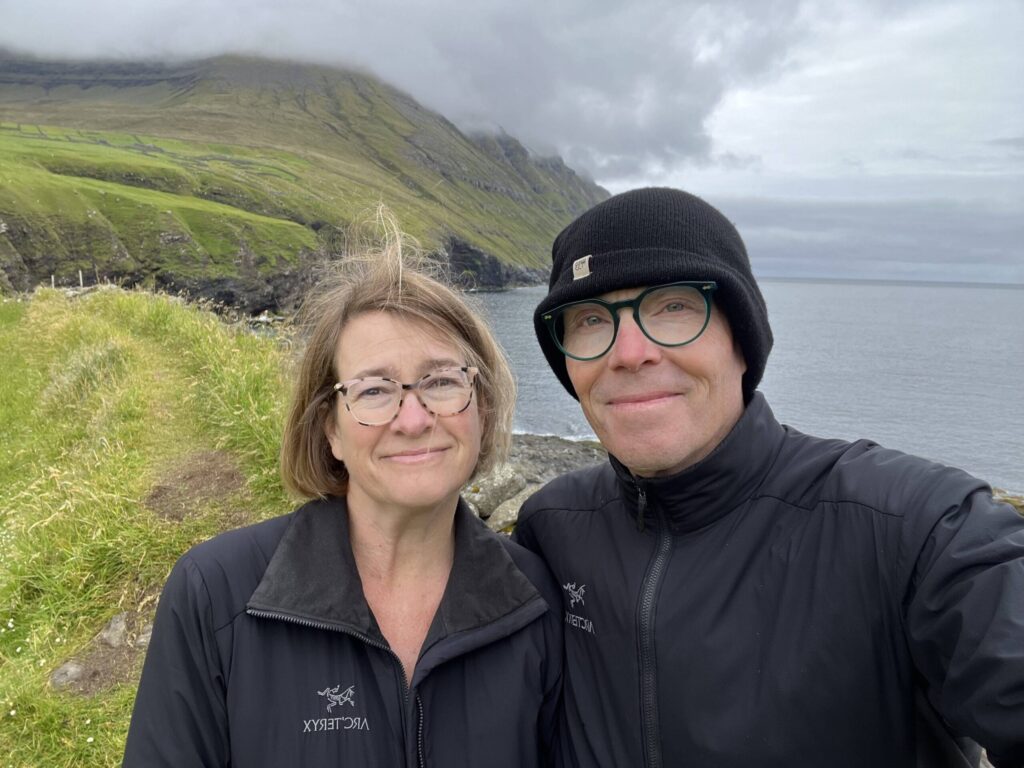
From French pastries and sunshine to misty cliffs and 50-degree mornings—we made a hard pivot.
The Faroe Islands checked two boxes at once.
First: the weather. Lisa likes it cool. It was summer, but not the sweaty, sunburned kind. Think chilly, breezy, misty mornings, and cliffs draped in fog. Second: visas.
When you’re living on the road full-time, visas shape your life. The Schengen Zone gives Americans 90 days in any rolling 180\. That limit resets gradually—and it’s always looming.
The Faroe Islands aren’t in Schengen. So after France, they gave us a kind of legal breathing room. A loophole with cliffs.
And beyond the red tape? Magic.
The landscape was cinematic. The air was cold and clean. And Lisa was in heaven—Tour de France on TV, tea in hand, shouting at cyclists she refers to by nickname.
Copenhagen, Denmark
Culture shock isn’t just about language or customs. Sometimes, it’s population density.
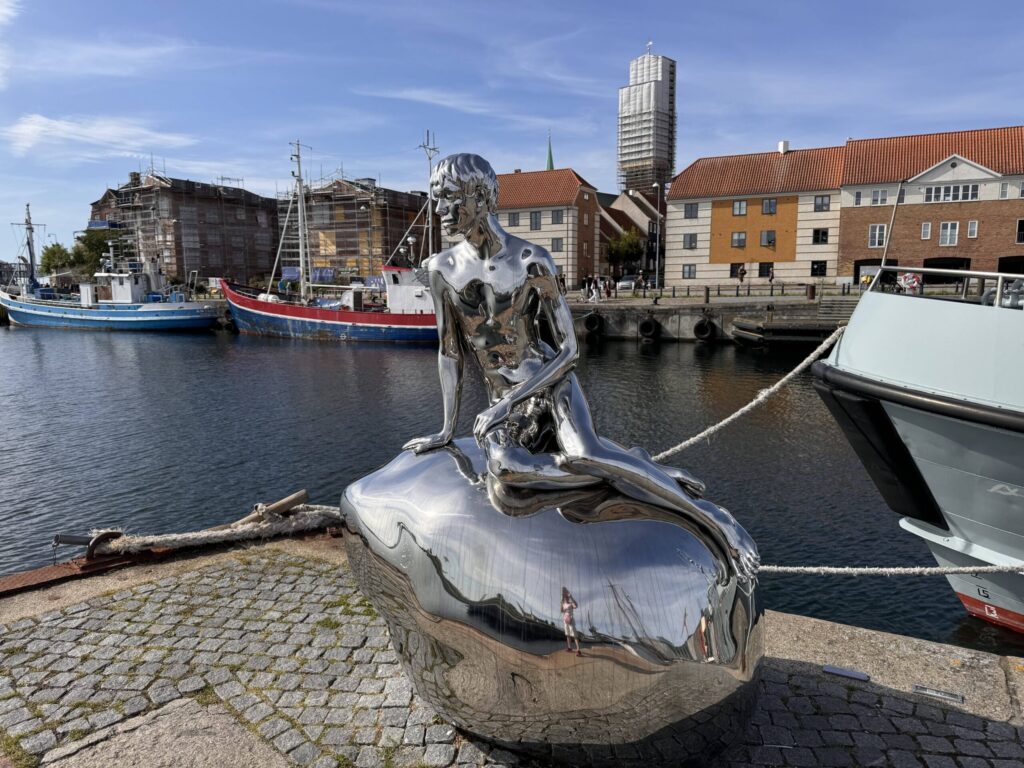
We went from a Faroese village of 5,000 to what felt like 5,000 people just in our terminal at the Copenhagen airport. The contrast was immediate—and loud.
We’d technically been to Denmark before. A layover once. A cruise stop another time. My standout memories? A perfect Danish danish and paying $7 for a Coke.
Both memories held up.
Prices have only increased. But so has the quality of the pastries. We skipped the Coke this time and doubled down on danishes. And on the last day, we stumbled into a pizza place that served one of the best pies we’ve ever had. No exaggeration. We're already planning a return visit—mostly for another round of that pizza.
Copenhagen itself is beautiful. Survey after survey says it’s home to some of the happiest people on Earth. I’m not sure if I could read that in their faces—but I can confirm they all look incredibly fit.
I’ve never seen that many bicycles in one place. Bike lanes come with pedestrian crosswalks just to give people a shot at crossing the street. Maybe it’s how they burn off the danishes (and pizza). Or maybe this is just what a functional city looks like when you fund it properly.
It’s impressive. And expensive. Very expensive.
Raleigh
From cardamom-laced bliss and bicycle utopia, we landed hard in reality: Raleigh, home of the annual diagnostic decathlon.
Our stop in Raleigh is always short—and always intense.
We fly in, pick up two rental cars (one for each of us), and speed off in opposite directions. Between us, we usually have a dozen or more doctor and dentist appointments—check-ups, labs, follow-ups, more labs. It's a full-time job just keeping track of the medical calendar. Add in tests and imaging and procedures, and it starts to feel more like a week-long diagnostic retreat than a relaxing visit home.
But it’s not just medical madness. There’s a long list of people to see—friends, family, folks we’ve known forever. It’s the kind of list you can’t—and don’t want to—skip. So we schedule lunches, coffees, dinners, and often end up hosting people at the hotel bar just to squeeze it all in.
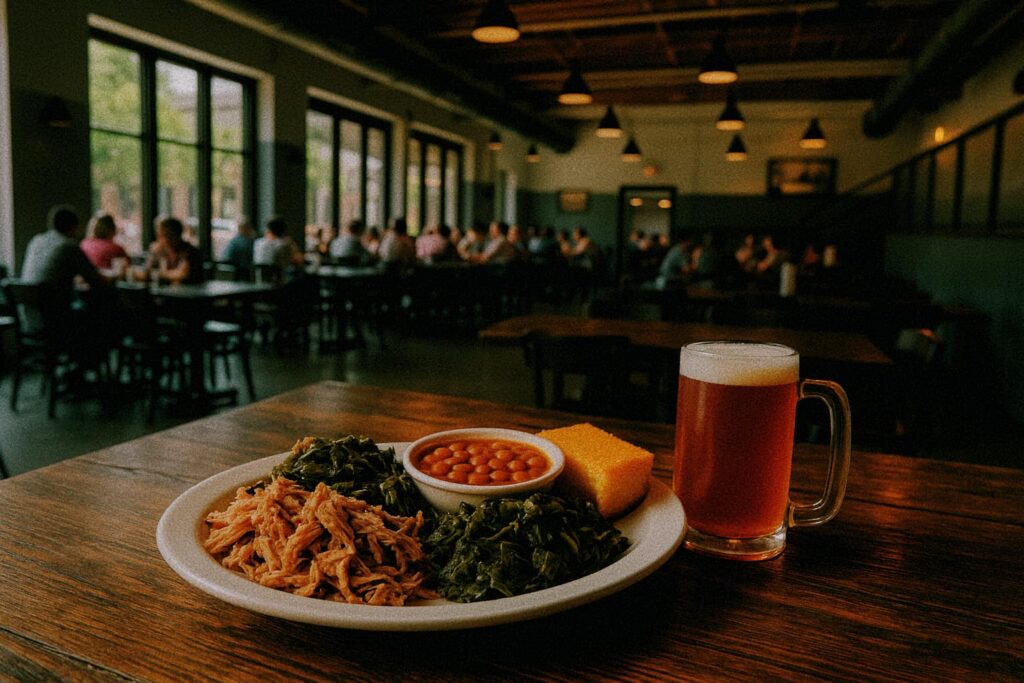
We book a hotel right off the highway so we can zip from appointment to appointment, restaurant to restaurant. And yes, there’s always a restaurant list. I make my usual pilgrimage to Greek Fiesta, Lisa heads to Boulted Bread, and I do my best to eat enough barbecue to last me another year.
It’s a sprint. A chaotic, exhausting, nonstop race of errands, obligations, and indulgence. Every year, we tell ourselves to plan something quiet and restorative right after Raleigh. And every year, we forget. We jump into the next adventure, already tired.
Still, there's nothing like returning to a place that feels like home—even if it runs you ragged. It’s a reunion with people and places we love. And for a couple of weeks, it's good to be back. Just don't expect us to relax while we’re there.
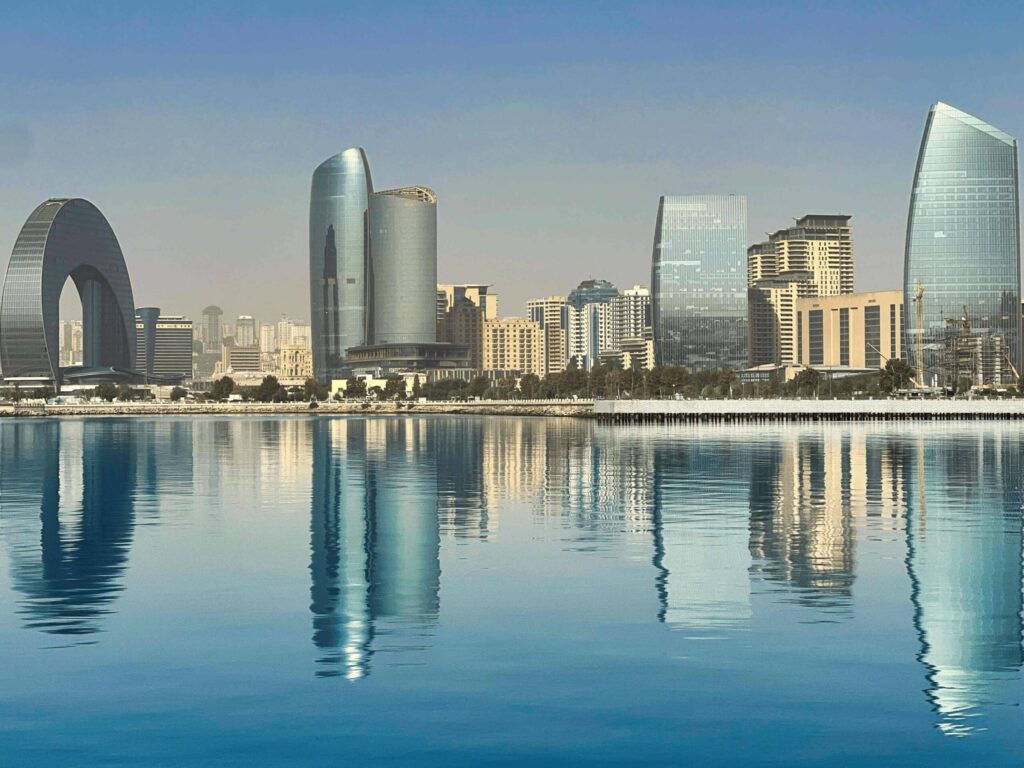
Baku, Azerbaijan
From the US, we flew to the Istanbul airport for a very quick layover where we overdid it on baklava and tea. I don't think we've ever passed through that airport without overdoing it, but it's totally worth all of the calories, fat, and sugar. The baklava in Turkey is the best in the world and the Turkish Air lounge does a shockingly good job of cranking out delicious Turkish food and desserts.
But the lounge visit was quick, and 30 minutes later we rushed to our gate and off to Baku, where we landed just a couple of hours later.
We hadn’t planned it, but we arrived just as the city was gearing up for its annual Formula 1 race.
After seeing Monaco’s post-race deconstruction last year, it was fascinating to watch Baku getting built up for its own. Same scale. Same drama. Just in reverse.
The race takes over the center of the city—roads closed, fences up, bleachers rising out of nowhere. Even if you’re not a fan, the energy is contagious. You can feel the spectacle taking shape.
We didn’t stick around long enough to see the main event, but it was enough to remind us why the F1 calendar might make a pretty decent travel blueprint. Every stop is somewhere worth seeing, and billionaires clearly know how to pick a backdrop.
We only spent a few days in Baku, but it left an impression. The city feels ambitious. Confident. On the edge of something. We left curious—and just a little bit tempted to come back for race day another year.
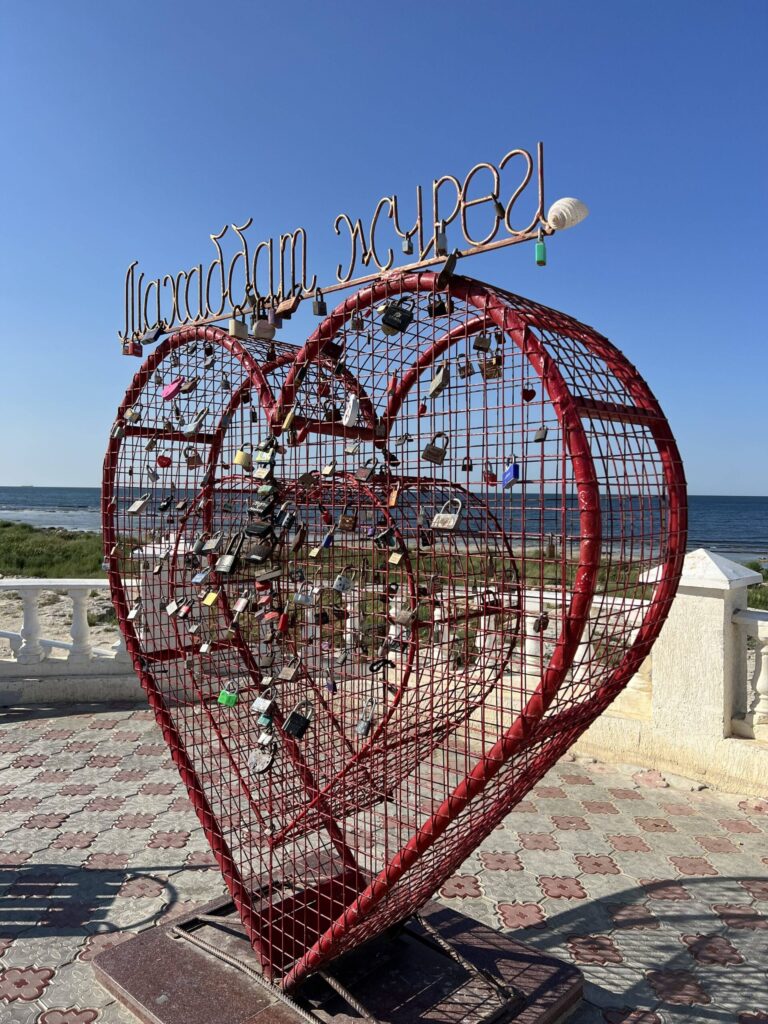
Aktau, Kazakhstan
Because of the conflict between Azerbaijan and Armenia, there are no direct flights between the two countries. So we looked at a map, checked a few schedules, and picked a work-around.
Aktau.
It was supposed to be a quick plane change. But we’ve been down this road before. A short layover becomes a few nights. A new dot on the map becomes a story.
Aktau is a small city perched on the Caspian Sea, mostly visited by locals looking for a getaway. It has a handful of waterfront hotels, busy restaurants, and more waterparks than you'd expect for a place where nobody really swims in the sea.
It’s not flashy, but it’s easy.
And while we met plenty of people who spoke English, we also encountered a common reality: speaking a language is not the same as understanding it. Conversations sometimes felt one-sided—lots of nodding, lots of smiles—but little back-and-forth. It’s a reminder that comprehension is its own skill, and accents plus vocabulary can widen the gap fast.
Still, the welcome was warm. The food was good. And the layover-turned-stopover gave us a glimpse of a place we had never expected to see.
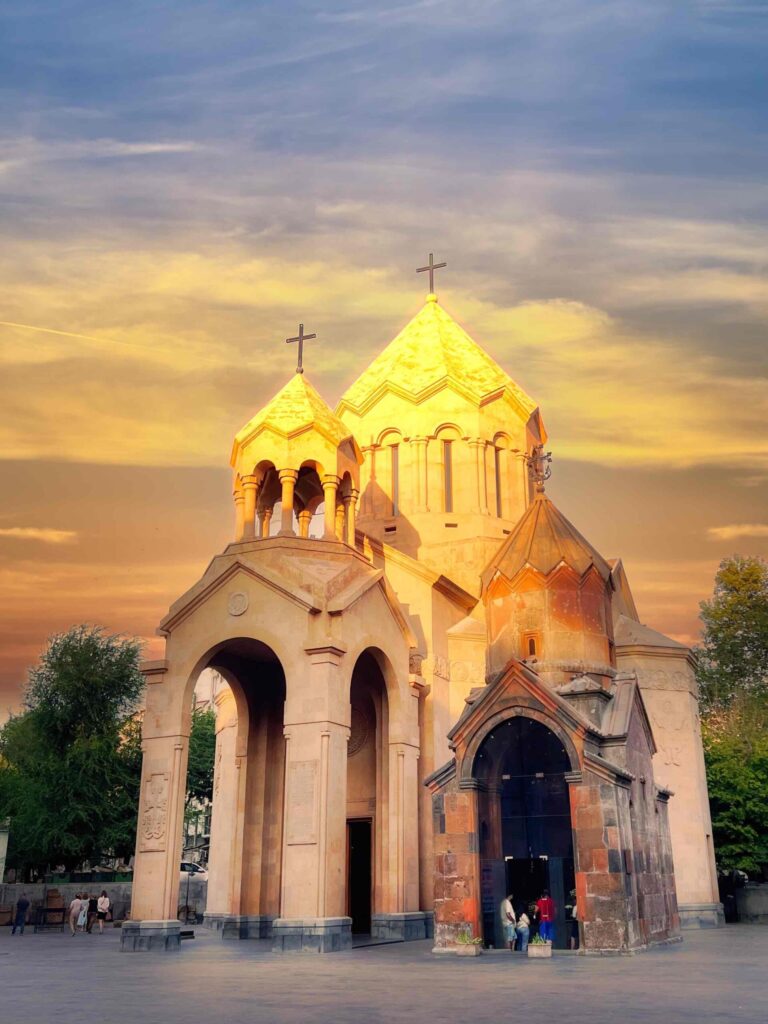
Armenia
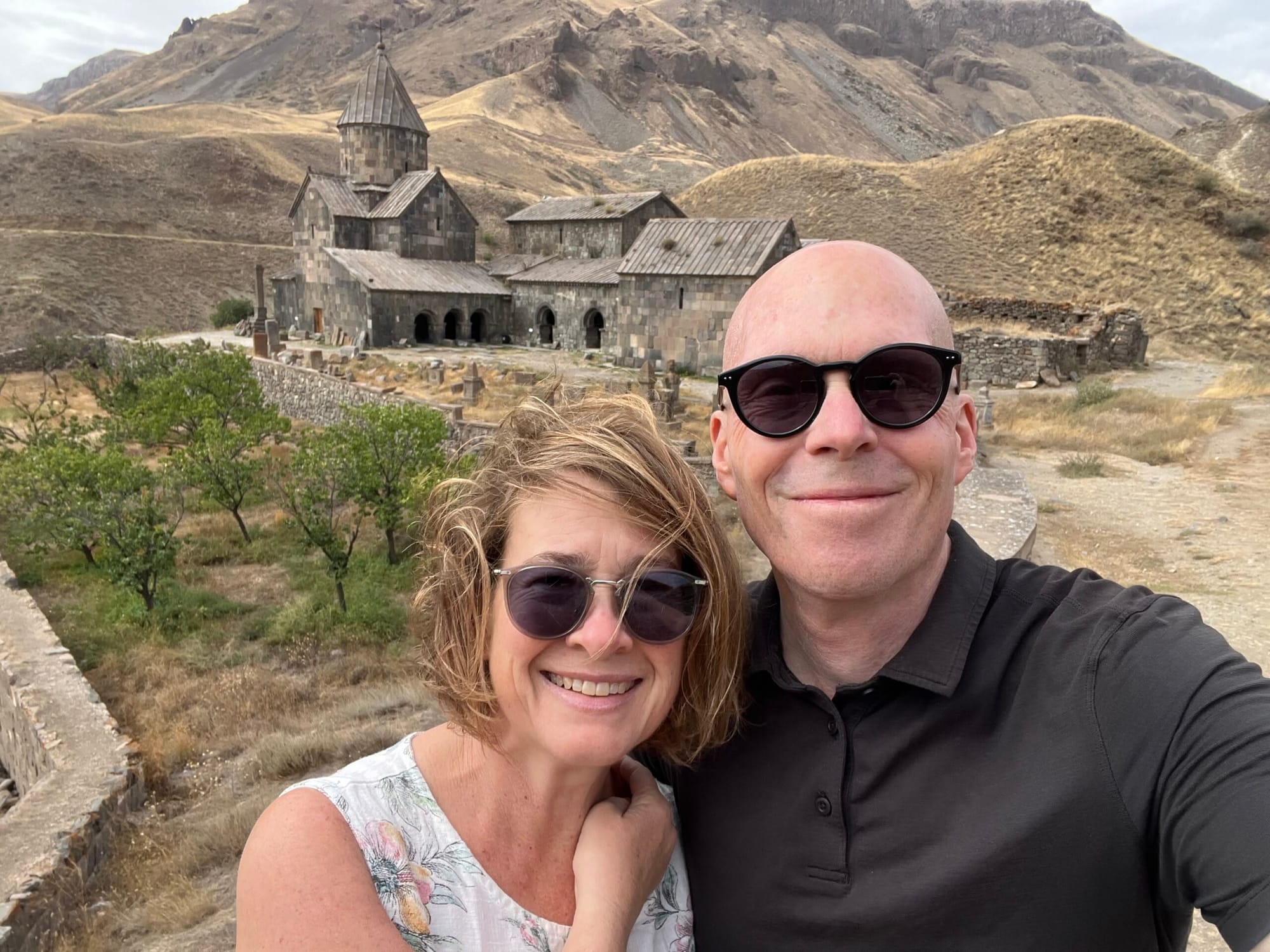
We arrived in Armenia after our quick stop in Kazakhstan and a few days in Azerbaijan. The contrast was immediate—and heavy. Armenia had lost a big chunk of territory to Azerbaijan just a few months earlier. And even as outsiders, we could feel the weight of that loss hanging in the air.
It’s a small country. Tightly knit. Deeply proud. But its geopolitical reality is sobering—surrounded by stronger neighbors, short on allies, and fighting to hold its ground.
That kind of vulnerability creates a particular kind of unity.
You feel it in the streets. There’s tension, yes—but also quiet strength. Dignity. A shared sense of holding the line.
We stayed a full month. A week on the road, then four weeks in Yerevan. And with that kind of time, you stop being a tourist. You start to see how people live. What they value. How they carry themselves.
We went to the ballet. To the symphony. Multiple times. The old Soviet-era concert hall is grand and worn, but the talent inside? Flawless. These weren’t just performances. They were declarations. The arts here aren’t a luxury—they’re a cultural identity, passed down, held tight, and delivered with heart.
Then came Independence Day.
Thousands packed the main square. Full orchestra. Huge choir. Traditional songs. Cultural performances. The kind of night where a nation pours itself into a single space.
No tourists with selfie sticks. No curated Instagram moments.
Just people. Proud. Stoic. Present.
And then—just when the emotion was already at full tilt—the orchestra launched into Queen’s “We Are the Champions.”
Not traditional. Not expected. Absolutely perfect.
People cried. We cried. The crowd cracked open. You could feel something release—something too big for words, too fragile for analysis.
It was one of the most powerful moments we’ve ever experienced.
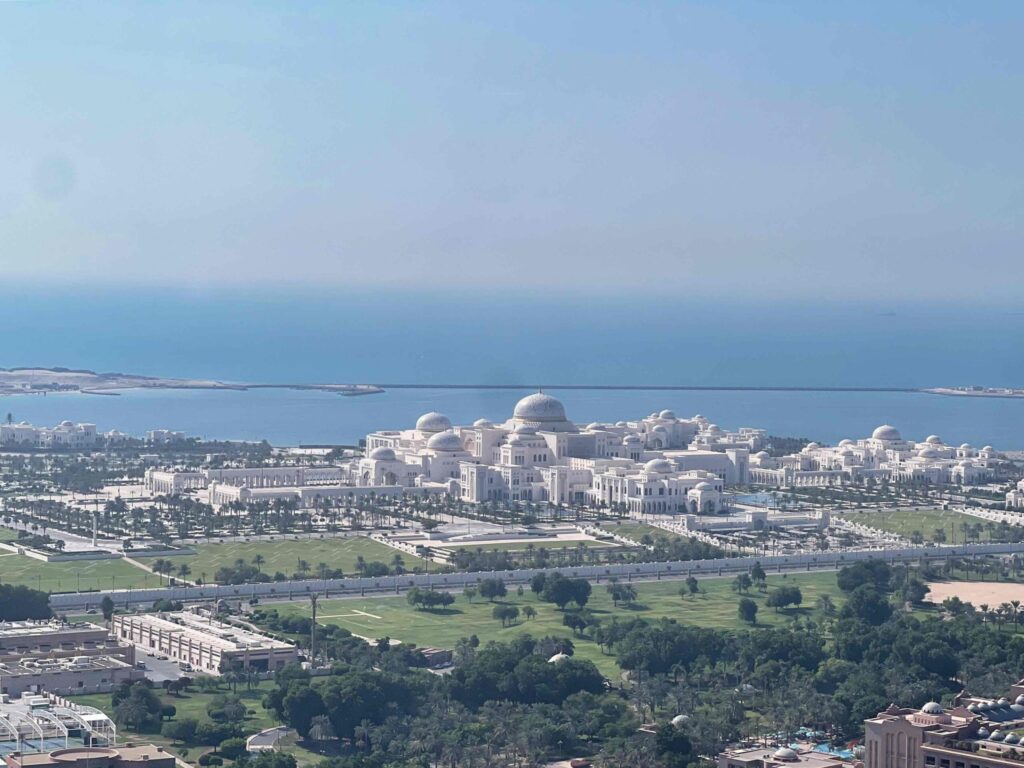
Abu Dhabi, UAE
We’ve spent a lot of time in Dubai over the years, so it’s easy to assume Abu Dhabi—just an hour down the road—would feel similar.
It doesn’t. Not even close.
Dubai is commerce in city form. Glass towers, designer malls, man-made islands. It’s engineered to attract money, and that money covers everything in glitz. One day last year we walked past ten ultra-luxury cars parked in a row—each easily worth over a million dollars.
Dubai doesn’t whisper wealth. It shouts.
Abu Dhabi plays a different game.
It’s the capital. It’s home to the national government, the royal family—and unlike Dubai, it actually has oil. That one detail changes everything.
The vibe is more reserved. More rooted. You still get luxury, but it’s paired with tradition. Gravitas instead of gloss. Museums, mosques, monuments.
The Sheikh Zayed Grand Mosque is one of the most monumental religious sites we’ve ever seen. The cultural institutions feel purposeful—designed to preserve, not just impress.
For us, it was a perfect stopover on the way to Asia.
Just a few days to slow down in a place that knows exactly what it is—without needing to bling it up to prove itself.
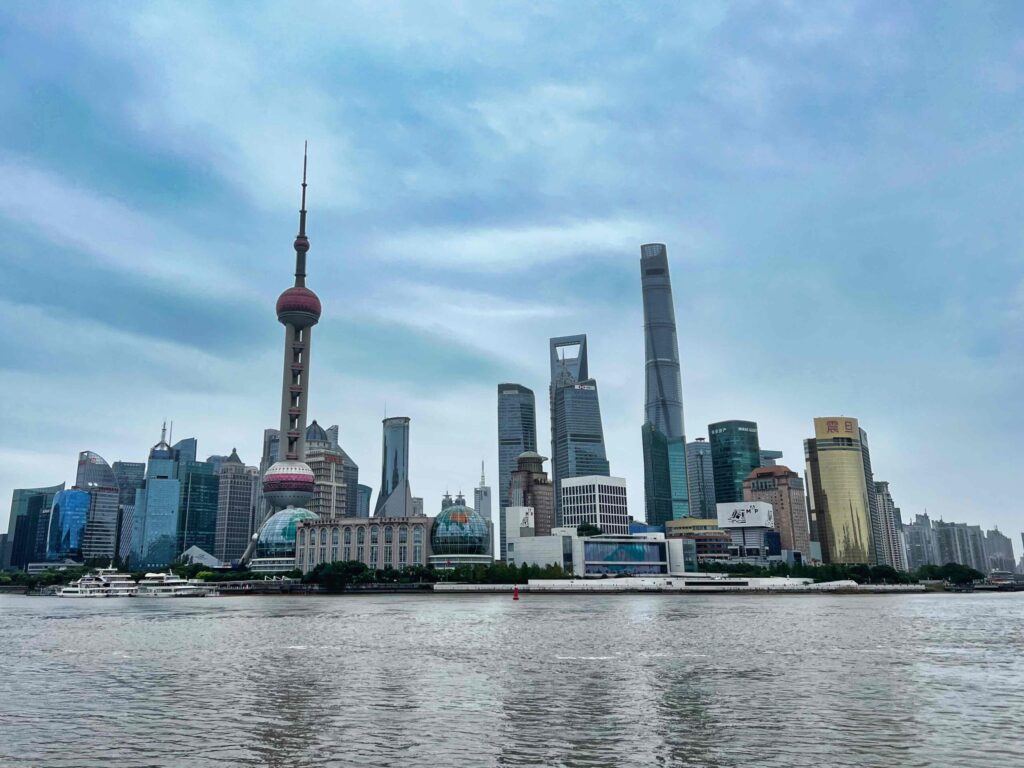
Shanghai, China
Shanghai is hard to resist.
There’s so much to see, so much to eat—and the prices are surprisingly low. People say visiting China is like stepping ten years into the future at prices from ten years in the past.
They’re not wrong.
It’s not dirt cheap—this isn’t Vietnam—but compared to the US or Europe, it’s a bargain. Beautiful restaurants, gleaming malls, slick shops—and everything costs less than you’d expect.
Public transport? Spotless. Efficient. Practically free.
A subway ride in Shanghai costs just a few cents. The stations feel brand new. Compare that to London or Amsterdam, where a single ride can cost as much as a latte.
And it’s not just infrastructure—it’s energy. The city feels like it’s investing in its people. Middle-class life, at least in Shanghai, is being actively supported.
You can feel the momentum. In the food courts. On the metro platforms. In the shine of everyday life.
Things change fast in China.
Last time we were there—Beijing, eight years ago—the traffic noise was oppressive. Engines revving, horns honking, and exhaust fumes filling your lungs.
Now, everything’s electric. The traffic is silent. No roar, no rumble—just quiet movement.
It sneaks up on you. Until one day, you realize you’re living in the future.
Of course, Shanghai gets extra attention and resources because it’s such a visible global city. But we’ve been to a lot of well-funded places around the world, and Shanghai holds its own.
It’s not just livable. It’s exciting.
And then, a short flight away, you find yourself stepping backward—way backward.
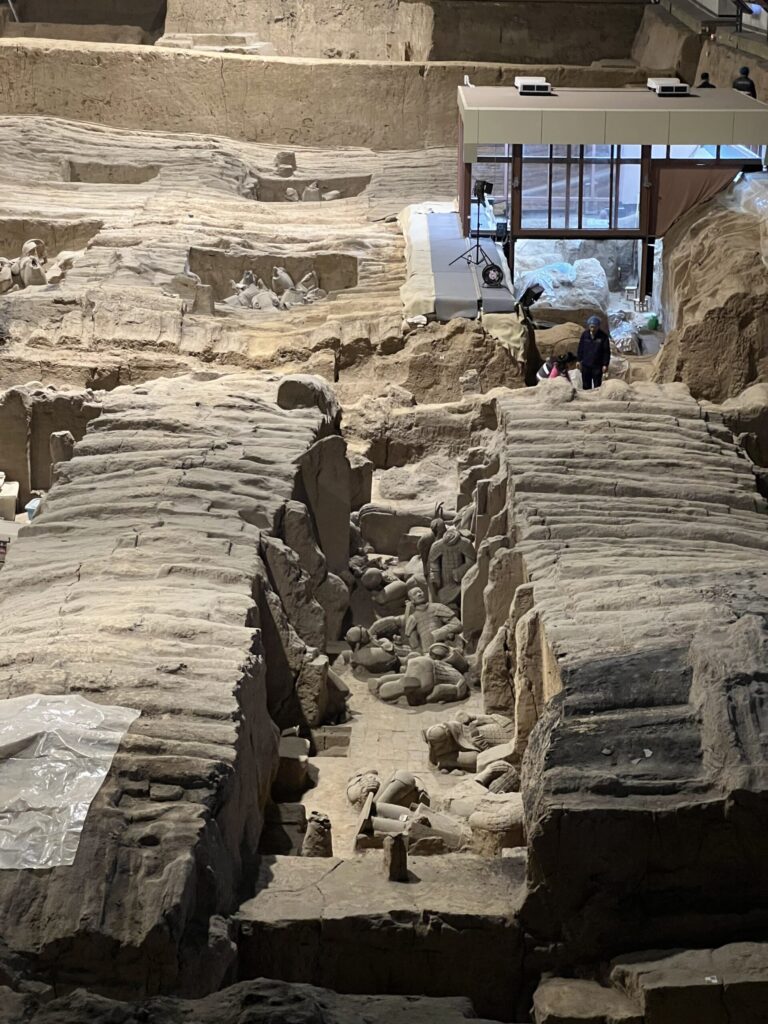
Xi’an, China
We’ve seen a lot of archaeological sites over the years. Egypt comes to mind.
But most of them feel … dormant. You wander through ancient ruins with faded info boards and a few sunburned volunteers on summer break. The digs are underfunded. The work is paused, waiting for a new grant.
You don’t feel energy. You feel dust.
And then you go to Xi’an.
The Terracotta Warriors aren’t just a museum piece. They’re alive—with motion, science, purpose. Researchers in full gear are on the floor, actively unearthing, restoring, cataloging.
High-tech equipment is everywhere. It doesn’t feel like a tourist site—it feels like a lab.
I hadn’t felt that kind of buzz since visiting the Kennedy Space Center as a kid. You can sense science unfolding in real time.
This isn’t just preservation. It’s resurrection.
And Xi’an itself? Not what I expected.
I imagined a sleepy town with a famous dig nearby.
It’s a modern city of nine million. Fast-moving. Alive. Surprising.
And very much awake.
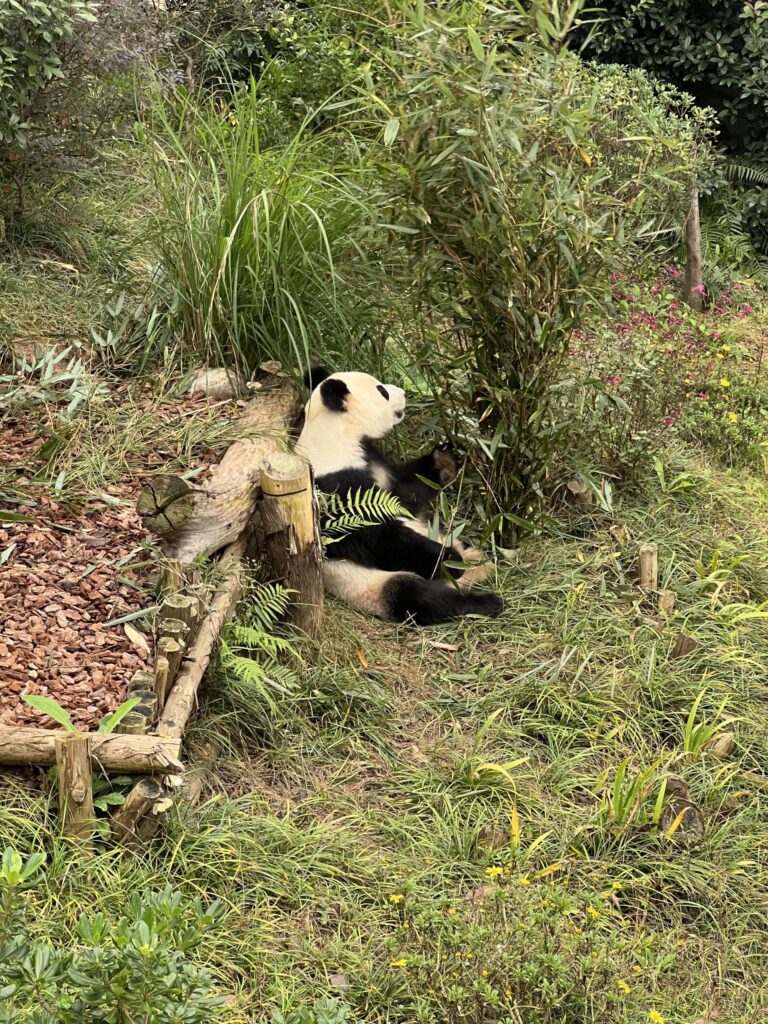
Chengdu
From archaeology in overdrive to animals and appetites—Chengdu promised a different kind of adventure. Not all of it went down easy.
The city is famous for two things: pandas and Sichuan food. We ticked both boxes, though not exactly as planned.
We started with the pandas.
We got to the sanctuary early—before they released the animals into the viewing areas. We waited for about an hour, until finally the pandas ambled out, ate a little bamboo, then promptly went back to sleep.
They’re beautiful. Enormous. Cuddly-looking.
And shockingly lazy.
I was glad we had morning tickets, as I suspect the afternoon crowd mostly sees nap time.
Then came the food tour. A deep dive into Chengdu’s street food scene. Big flavors, bold spices … and a big mistake.
By morning, I had food poisoning.
When you live in hotels full-time, you don’t get to ‘recover at home.’ You deal with it where you are. A couple of days of misery, followed by a few more of nibbling cautiously at bland food.
And spicy Sichuan cuisine? Not ideal for a healing gut.
To make matters worse, Chengdu sits in a valley. As winter approached, the cool air trapped pollution. Some days felt more gray than breathable.
The food, the fog, the pandas, the bug—it all left Chengdu feeling incomplete.
We’ll need to go back.
Oh, and my mother joined us during that stretch, too.
Just to keep things interesting.
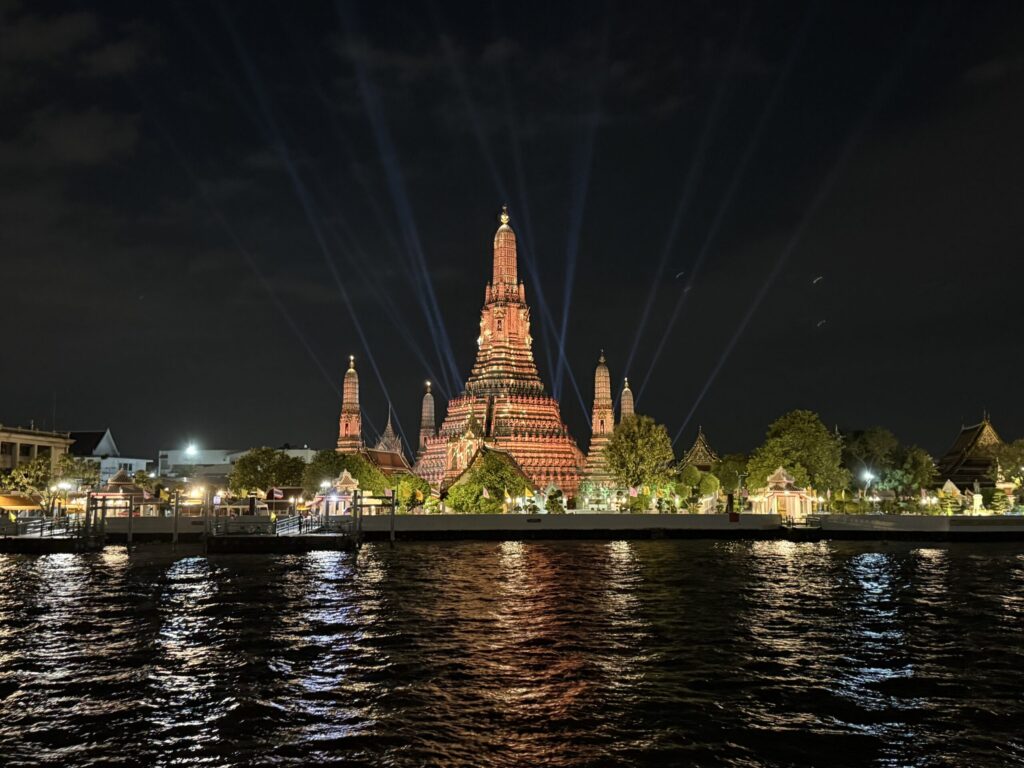
Bangkok, Thailand
We had planned to spend ten days in Bangkok over Thanksgiving. Just a quick visit with the kids before heading to the beach.
But then a medical issue popped up—and the beach got bumped.
We ended up staying for 30 days. And honestly? There are worse places to be when things go sideways.
There’s a lot of buzz about medical tourism—flying overseas to save money on care. That’s not what we’re doing.
We’re not flying to Bangkok for treatment. We just happen to live on the road. And eventually, like anyone, one of us needs to see a doctor.
Bangkok keeps turning out to be the right place for that.
Lisa and I each have our go-to hospitals. In much of the world, ‘private care’ doesn’t mean a solo doctor in an office. It means clinics inside hospitals. The doctors move between them. Appointments are available quickly. Walk-ins are common. No six-month waits.
And the care?
Excellent.
Sure, Bangkok might trail the US a little on the most cutting-edge tech. But what they lack in gadgets, they make up for in time, attention, and compassion.
It’s a good trade.
Our lifestyle gives us options. If we ever need something highly specialized, we can fly wherever that’s available. But for the routine stuff—physicals, blood tests, even colonoscopies—Bangkok more than delivers.
Accessible. Affordable. Efficient.
So instead of a beach vacation, we got a longer visit with the kids, a round of doctor visits, and a reminder:
Sometimes the best plans are the ones you didn’t make.
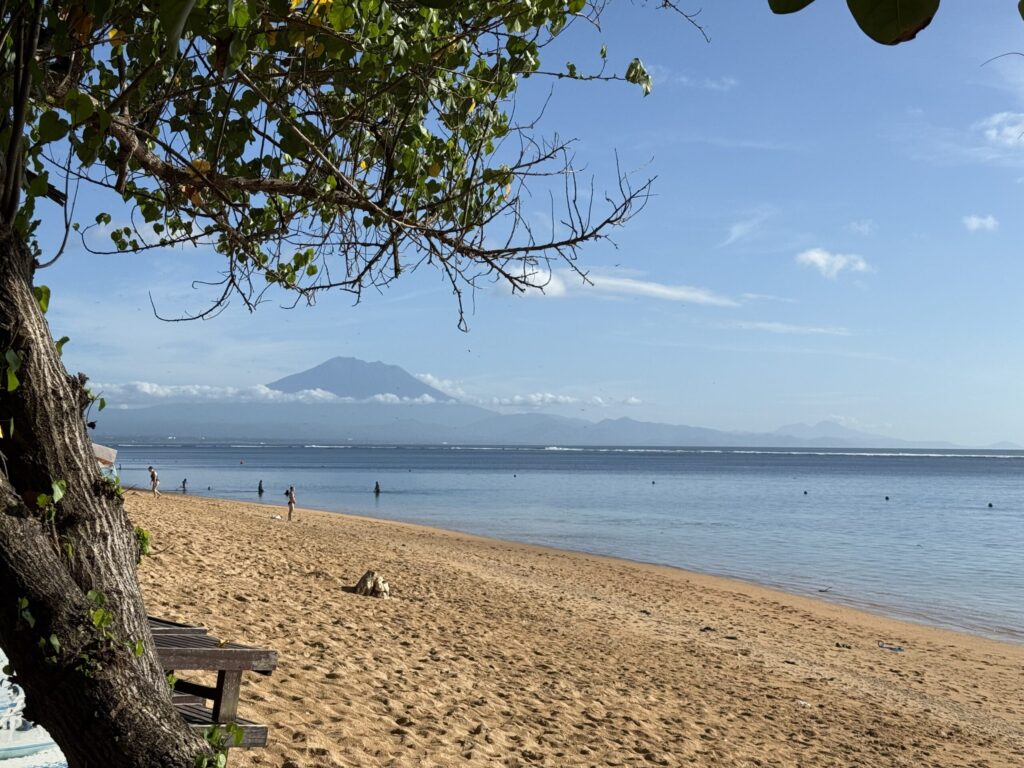
Bali, Indonesia
Bali has a problem. It’s paradise—but overcrowded.
The island doesn’t make overtourism headlines like Venice or Dubrovnik, but it should. Places like Ubud and the southern beaches are packed. Shoulder-to-shoulder, bumper-to-bumper packed.
We’ve seen this before. Amalfi Coast, for one. Gorgeous towns, impossible traffic, bottlenecked streets. You spend all day elbowing through the crowd … and the most relaxing moment is when you finally leave.
Bali’s not that different—unless you plan it right.
We didn’t try to ‘do’ Bali. We picked a spot—Sanur Beach—and stayed put for two weeks. No temple tours. No waterfall hopping. Just stillness. Rest. Ocean.
One day, we broke our own rule. Took a cab across the island to meet friends for lunch. Big mistake. It took two hours each way—two taxis, endless traffic, and a whole lot of regret (but totally worth it to see our friends).
Bali has magic. It really does. It’s big enough to shape itself to your needs—peaceful or buzzy, spiritual or social.
But if you’re not careful, it’ll wear you out. The infrastructure is stretched thin. The island can feel more like a traffic jam than a retreat.
So yeah—go to Bali. Just don’t try to conquer it. Pick your place, settle in, and let the island come to you.
And next time? Maybe give the lesser-known spots a shot. The ones that haven’t been loved to death yet.
Jakarta, Indonesia
After the bottleneck that is Bali, Jakarta felt laid back.
It’s the capital of the fourth most populous country in the world—right behind India, China, and the US—yet most travelers skip it. That’s a mistake.
We’d heard the horror stories. The traffic. The chaos. So we planned ahead. Booked a suite at the Park Hyatt, dead center of the city. It was absurdly nice—like living in a luxury apartment with hotel service.
The location paid off. With a flexible schedule, we dodged the rush hours. Moved around easily. Explored without much hassle. And we noticed something strange: no crowds. No photo mobs. No lines. Just … life.
Jakarta doesn’t have a Colosseum or an Eiffel Tower. It has street scenes, workdays, schoolyards. You’re not being entertained—you’re being immersed.
The standout moment?
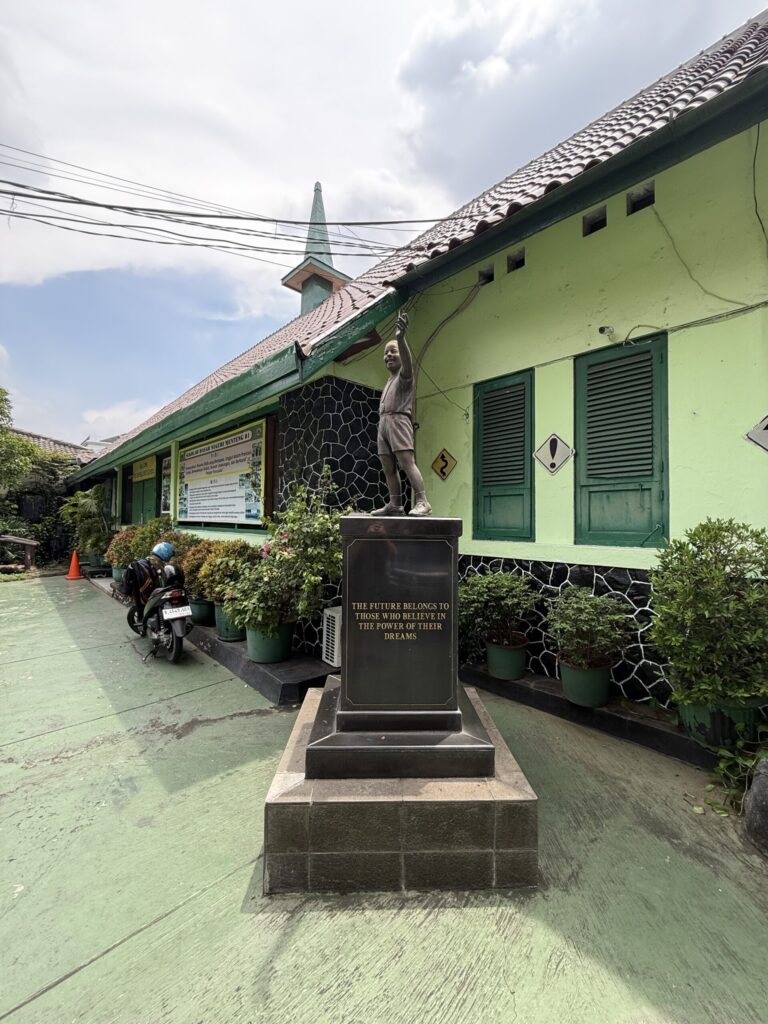
Barack Obama’s elementary school.
There’s a statue of third-grade Barack outside, and you can picture the kids streaming in, walking past this little monument to possibility. Imagine being a third-grader in Jakarta and seeing a statue of someone who once stood where you stand … and then became President of the United States.
That kind of story still resonates. Especially in a place where the leap from that schoolyard to the White House feels impossibly far.
Say what you want about America’s image abroad—but in that spot, with that statue? The dream is still alive.
Yogyakarta, Indonesia
We spent ten days in Yogyakarta—mostly inside a Marriott attached to a mall.
Not exactly a bucket-list experience. But sometimes, that’s just how it goes.
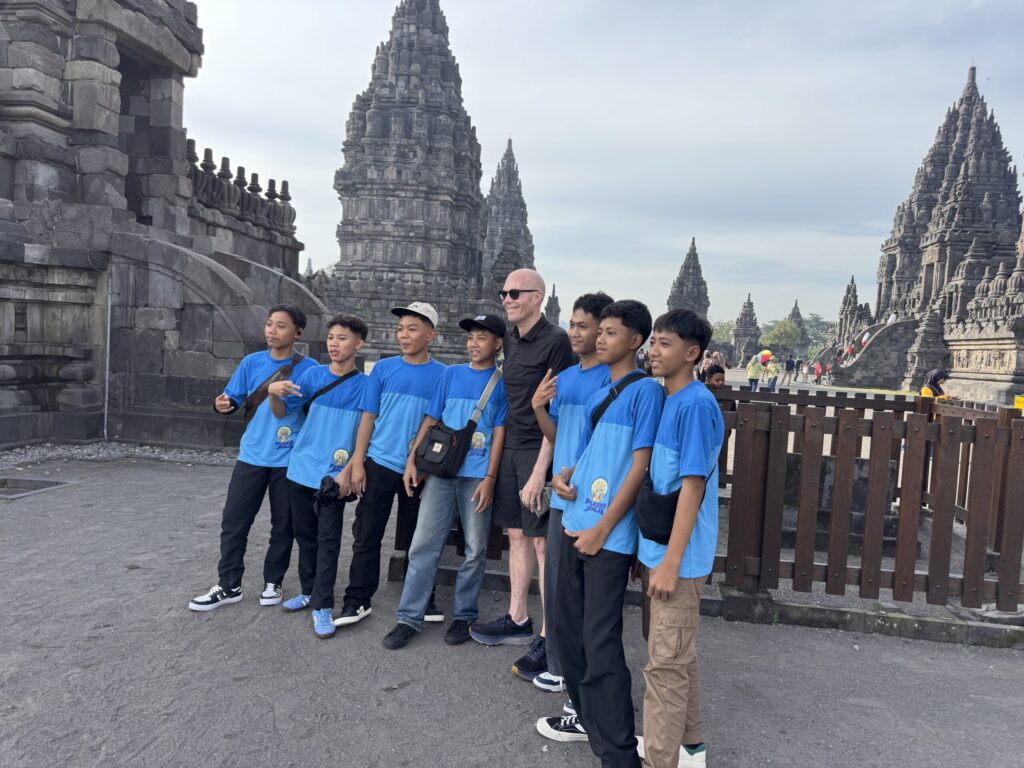
The weather was sweltering. The days blurred together. We visited a few archaeological sites, including the world’s largest Buddhist temple. Impressive, yes—but hard to fully appreciate when you’re melting. Most days, we drifted between the breakfast buffet, the laundry room, and the food court in the mall.
Still, one moment cut through the haze.
At one of the temples, we were suddenly mobbed by school kids on field trips. Rural kids, mostly. Limited English, unlimited enthusiasm. “Where are you from?” was the go-to question, immediately followed by selfie requests—dozens, then hundreds.
Even the teachers joined in.
We smiled. We posed. We answered the same questions again and again. It was a full-on photo shoot.
It could’ve been exhausting. Honestly, it kind of was. But we’ve learned to show up for these moments. Because in a lot of places, especially far from the usual tourist paths, a little kindness goes a long way. A few minutes of good energy become a memory for someone else, and for us.
And that’s what stuck.
Not the temples. Not the heat. Not the mall.
Just a bunch of beaming kids, elbowing each other for selfies, delighted that two random strangers showed up and played along.
Kolkata, India
Our first trip to India, in 2017, was a shock.
The noise, the density, the rawness—we weren’t ready. I still remember the moment a man with no legs grabbed my ankles to beg as he slid across a train station floor.
It was too much.
Unfiltered suffering up close. I didn’t know what to do with it. I just wanted to leave.
But we didn’t. We stayed for two months.
And over time, something shifted. The chaos became color. The noise became music. The contradictions started making a kind of sense. By the end, we weren’t just surviving India—we were starting to understand it.
Three visits later, it still wears us out. But it also fires us up. We’ve built a toolkit of strategies for handling the hard parts, and with that comes access to something extraordinary. There is no place in the world like India.
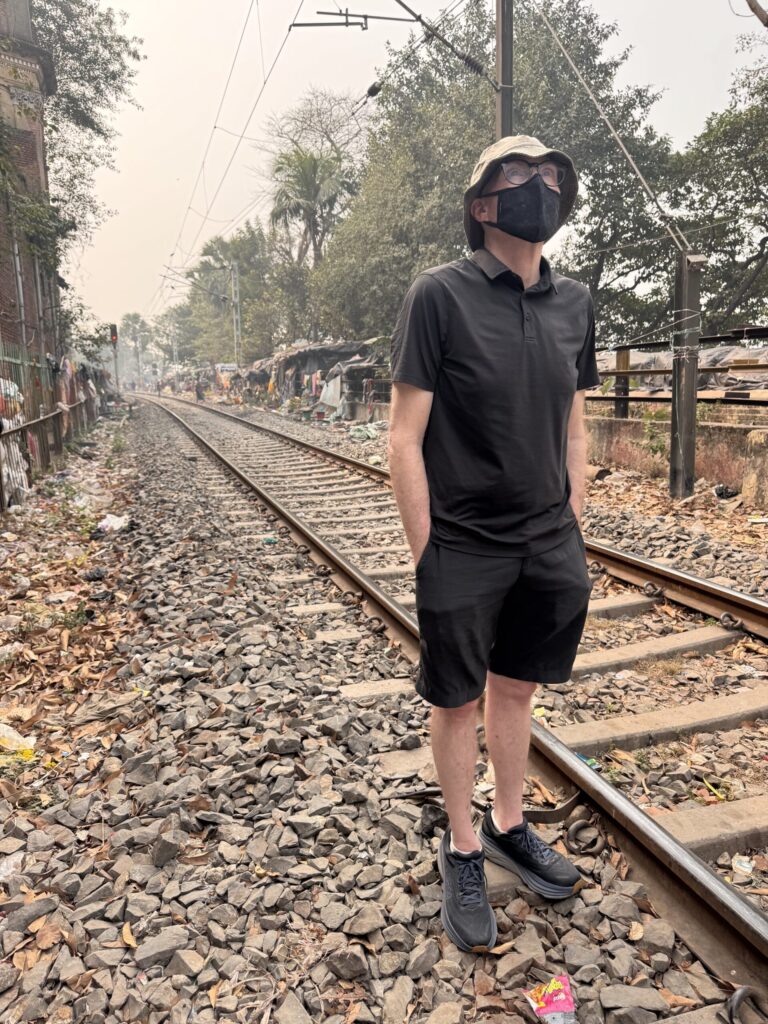
Kolkata showed up on the itinerary this year as a transit point—an easy stop on the way to Bhutan. One night turned into five. And in that short time, we remembered why we keep coming back.
It’s not the landmarks. Aside from Mother Teresa’s legacy, the city doesn’t revolve around one big draw. It’s just … India. Unapologetic. Intense. Honest.
We rode ferries across the river. Wandered aimlessly through crowded markets. Took in the constant motion. Nothing was curated, nothing polished for tourists.
It was alive.
And when we left, we still weren’t done. India’s already penciled in for next year.
Bhutan
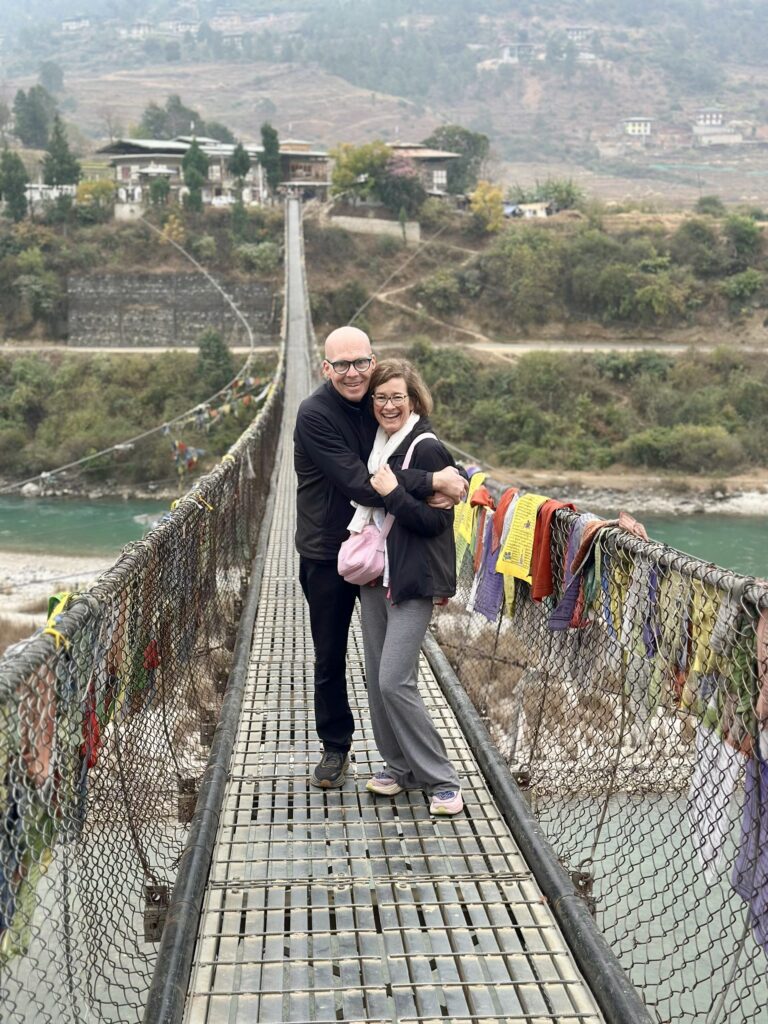
Everyone we talked to raved about Bhutan.
And to be clear—we get it. It’s beautiful. Peaceful. Clean. Thoughtfully run. But for us, it felt a little … quiet.
Bhutan is known for its National Happiness Index, and it’s easy to see that value in action. No traffic. No chaos. The hotels are consistent. The roads work. The food is safe. Everything runs smoothly.
And maybe that’s the thing.
Bhutan feels like South Asia—but filtered. It’s got the scenery of Nepal, a bit of India’s spiritual backbone, the mountains, the monasteries … but not the energy. Not the wildness. Not the edge.
For many travelers, that’s the point. The calm is the appeal. But we’ve spent time in India, Bangladesh, Nepal—places that shake you up, wear you out, and reward you with something unforgettable. Bhutan didn’t shake us. It tucked us in.
Part of that is by design.
Tourists are required to travel with a licensed guide. There’s a minimum spend per day. It’s structured, controlled, and curated—for good reasons. The government is trying to avoid overtourism and preserve culture. And in many ways, they’ve succeeded.
It’s an admirable model. It works. But it also means you’re always on a bit of a leash. Someone else is steering. And that’s not how we usually travel.
Bhutan is a kind, grounded place. We’re glad we went. We saw stunning landscapes, met thoughtful people, and caught a glimpse of a nation doing things differently.
But for us? It felt like a gentler remix of places we already knew.
Bangkok (Again)
From a curated kingdom to the chaos we know best—we were back in Bangkok.
It was a short visit this time. That’s our pattern now. Both kids live there, so we swing through, say hi, and move along. No one wants their parents lingering too long.
This time, we brought a friend.
Stephanie flew in to join us—her first real trip to Asia. And that changed everything.
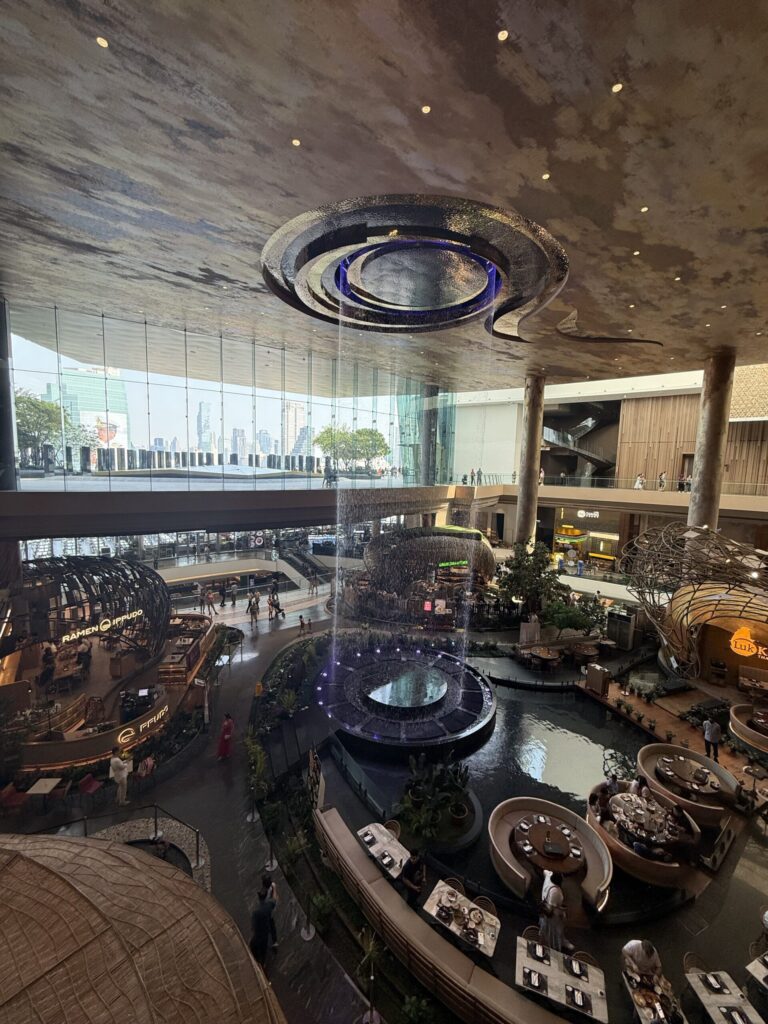
Bangkok is so familiar to us now that it barely registers as ‘foreign.’ We’ve got favorite restaurants, preferred clinics, shortcuts and side streets. It’s just … life.
But seeing it through Stephanie’s eyes? That reminded us of our first visit.
The noise. The traffic. The sheer density of humanity. It can be overwhelming. Especially if your baseline is Europe or the US. Nearly 60% of the world’s population lives in Asia. You really feel that number in places like Bangkok.
Watching Stephanie navigate the city brought us right back to year one. We remembered that early disorientation. The sensory overload. The feeling that you’re doing everything wrong and everyone knows it.
You forget that feeling—until you see it reflected in someone else.
It was a great visit. And a powerful reminder: travel doesn’t just take you places—it changes you, even if you don’t always see it happening.
Siem Reap, Cambodia
Nine years ago, we met Bunthy.
Back then, he was a quiet driver with limited English and a deep eagerness to learn. You could feel it. He didn’t just want to get you from point A to point B—he wanted to understand, to grow, to build something.
This time, we hired him again.
The van was new—well, new by Cambodian standards. Twenty-one years old, spotless, wiped down at every stop. But it wasn’t the van that impressed us.
It was him.
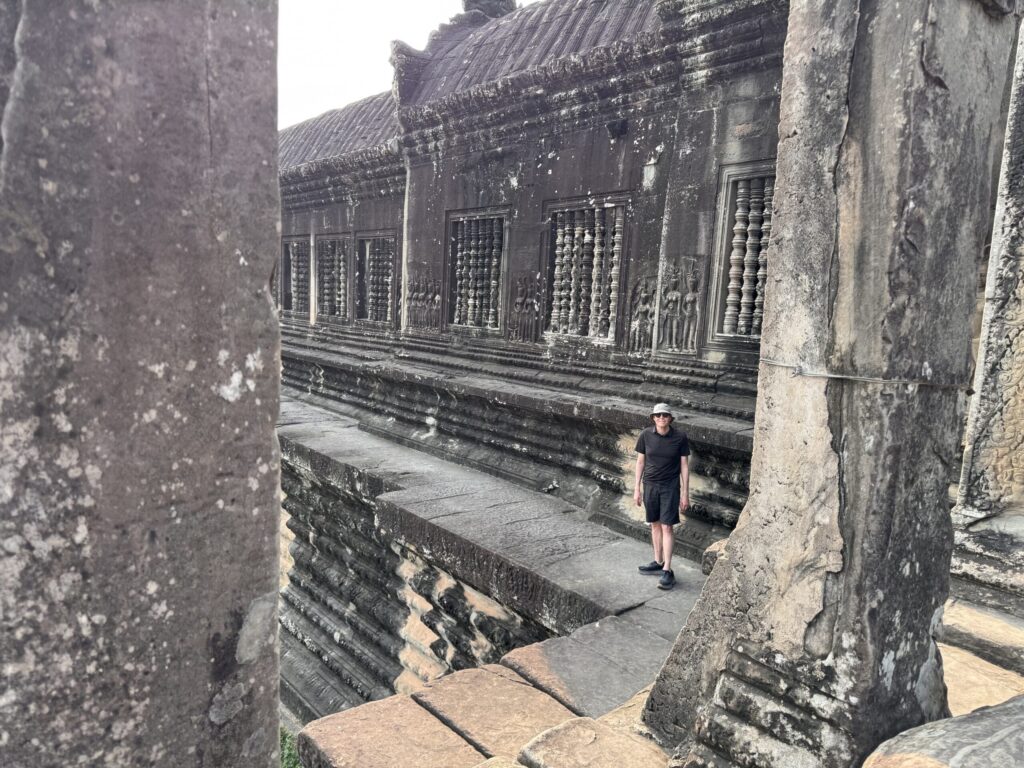
His English had improved dramatically. His knowledge of the sites around Angkor was sharp and studied. He didn’t just drive—he guided. With context, with history, with heart. He’d transformed. You could tell it had taken effort. You could feel the work.
And the pride.
It’s easy to forget, from where we sit, how much access we’ve had. Education, mobility, language—all of it came easily. For people like Bunthy, everything has to be earned.
He’s doing well by local standards. But ‘well’ in Cambodia is still a grind. He carries that weight lightly, with humor and warmth, but it’s there. You can see it.
The part that hit me hardest?
We’re roughly the same age.
We could’ve been classmates. Our kids could’ve played soccer together. But geography had other plans. Our lives were shaped by a map neither of us drew.
That sticks with you.
He’s raising three kids now. One in college. One in high school. One just starting school. The youngest wasn’t even born when we first met him.
Watching his journey unfold—seeing who he’s become—that meant more to us than any temple.
Singapore
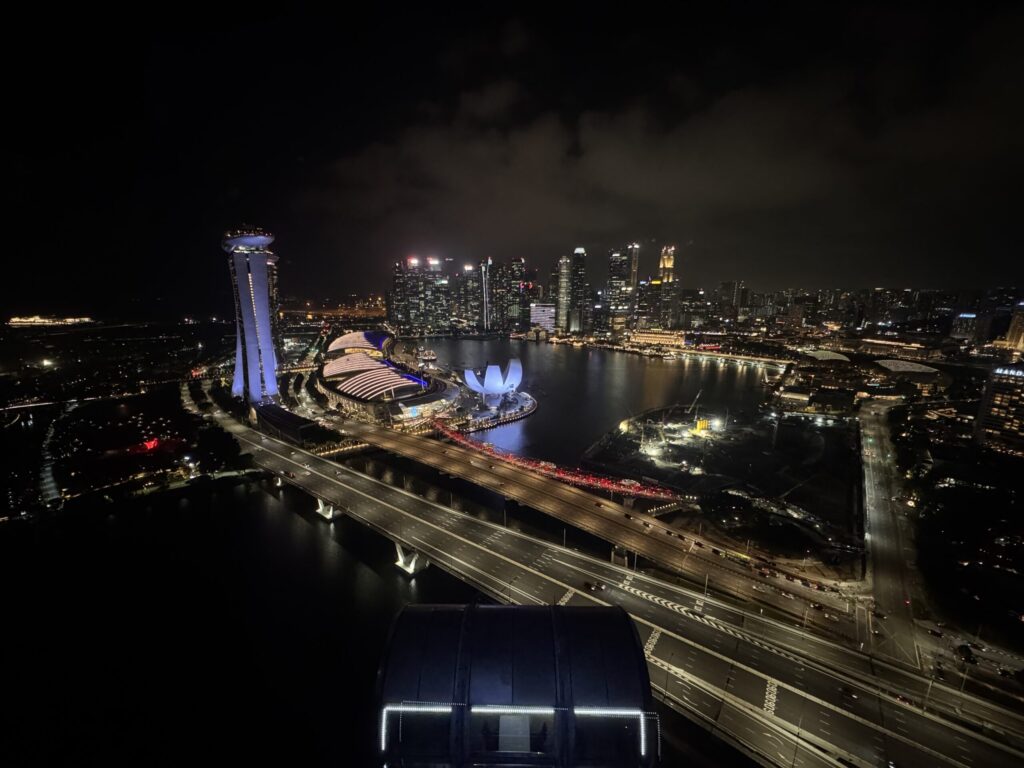
We spent five days in Singapore.
Having already seen the major tourist sights on past visits, this time felt like a chance to experience the city differently—for me, at least.
Lisa’s friend was with us, so the two of them spent most of their time visiting landmarks, shopping, and zipping all over the city.
I was free to stay closer to our hotel, exploring the neighborhood on foot. No checklist. No rush. Just walking.
I wandered the side streets where daily life unfolds—laundry shops, $3 lunch stalls, bakeries buzzing with regulars, old men sitting quietly outside their buildings.
I didn’t talk to many people, but just watching life happen is my favorite kind of connection.
Being in Singapore and not feeling the pressure to race through a list of must-see sights felt like a gift.
Too often, we (ourselves included) start a trip with an ambitious itinerary. We try to see everything—and end up experiencing most of it at a shallow level.
But when that pressure lifts, you start to see the details. The small things.
How people parent at playgrounds. How customers interact with vendors. How bakeries operate differently from culture to culture.
It’s the kind of texture you miss when you’re rushing.
This time, Lisa and I had two completely different versions of the city. Both were real. Both were valuable.
But for me, taking the time to just observe was a quiet reminder of how much richness lives in the ordinary.
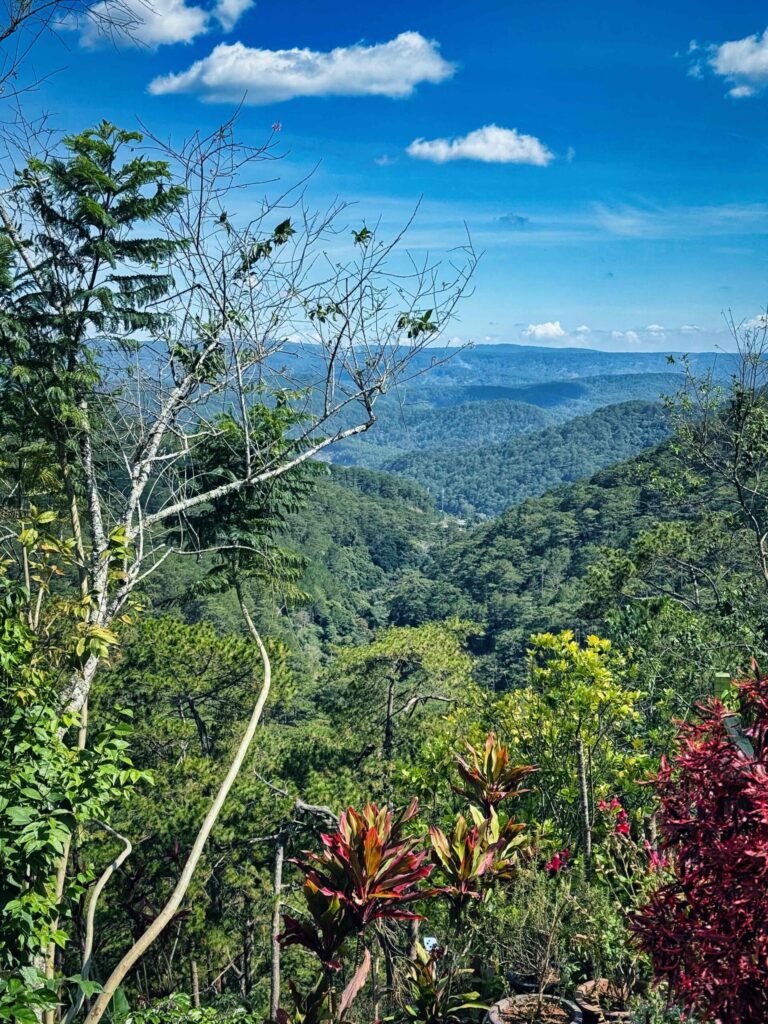
Da Lat, Vietnam
Our first trip to Da Lat, nine years ago, left us confused and a little frustrated.
We didn’t eat much Vietnamese food—mostly stuck to Western-style restaurants—and found the city harder to navigate than other spots we’d visited in Vietnam. It felt less approachable, more opaque. We never quite figured out how the place worked.
But the cool mountain weather stayed in our memories. So this year, we came back.
At 5,000 feet, Da Lat offers a break from Southeast Asia’s usual heat—high 50s in the morning, peaking around 80 by midday. It’s bliss.
And this time, everything clicked.
Maybe the food scene has expanded. Maybe we’ve changed. Either way, we ate incredibly well—Vietnamese as well as Western—and found the city far more accessible and enjoyable.
Looking back, we realized that our first trip to Da Lat felt like a failure. It was one of those rare moments when the cultural and language barriers really got in our way. We left feeling like we’d missed something important.
Coming back was a chance to fix that.
And we were both secretly hoping for a do-over.
What surprised us most was the contrast—not just in the city, but in ourselves. Walking the same streets, past the same buildings, we could see how much we’ve changed since year two of this journey.
The difference was striking.
We don’t often get that kind of clear perspective. But Da Lat handed it to us. And this time, we were ready.
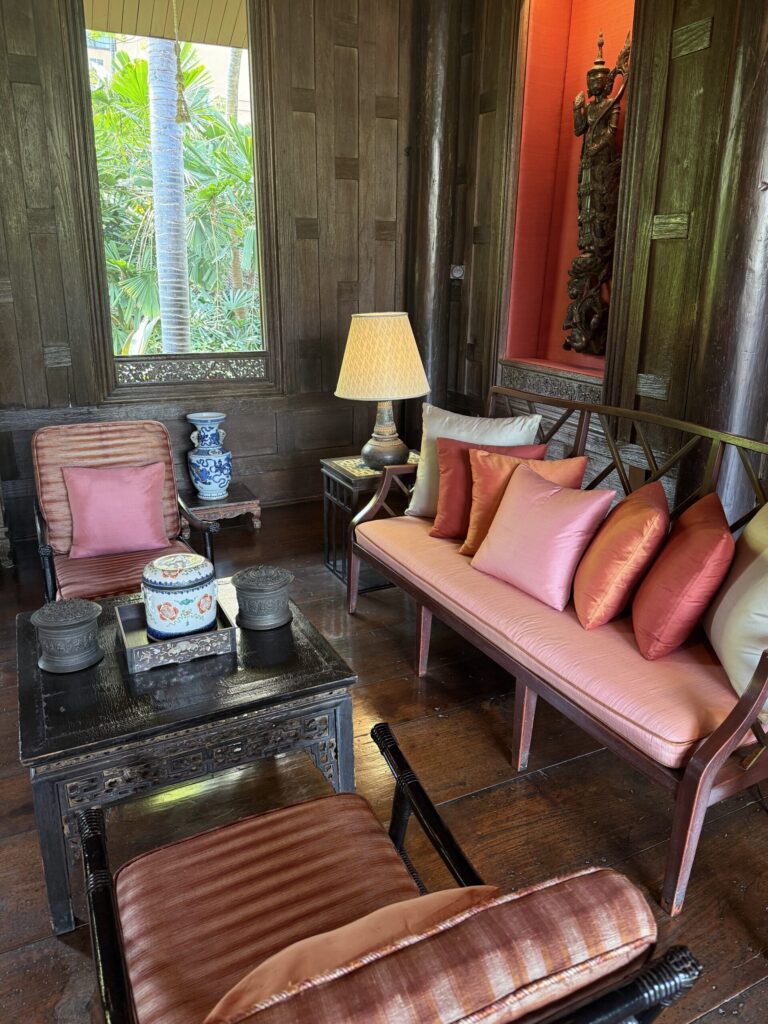
Bangkok (One More Time)
We always swing back through Bangkok before leaving the region. It’s where the kids are. It’s where the goodbyes happen.
And it’s always bittersweet.
This lifestyle makes the passage of time feel unusually precise. You can count the visits. You can measure the years. You can calculate exactly how many more times you might share a meal, hug a kid, or walk a familiar street.
It’s all there—in the spreadsheets, the calendars, and the constant math of long-term travel.
And once you’ve seen time that way, you can’t unsee it.
We left Bangkok knowing another visit was behind us.
And another sliver of time had quietly slipped away.
Norway
We’ve long been intrigued by the idea of sailing on a cargo ship.
A few cabins. No frills. Nothing to do but stare out at the open ocean and let the hours slip by.
I’ve always loved that idea. Lisa, less so.
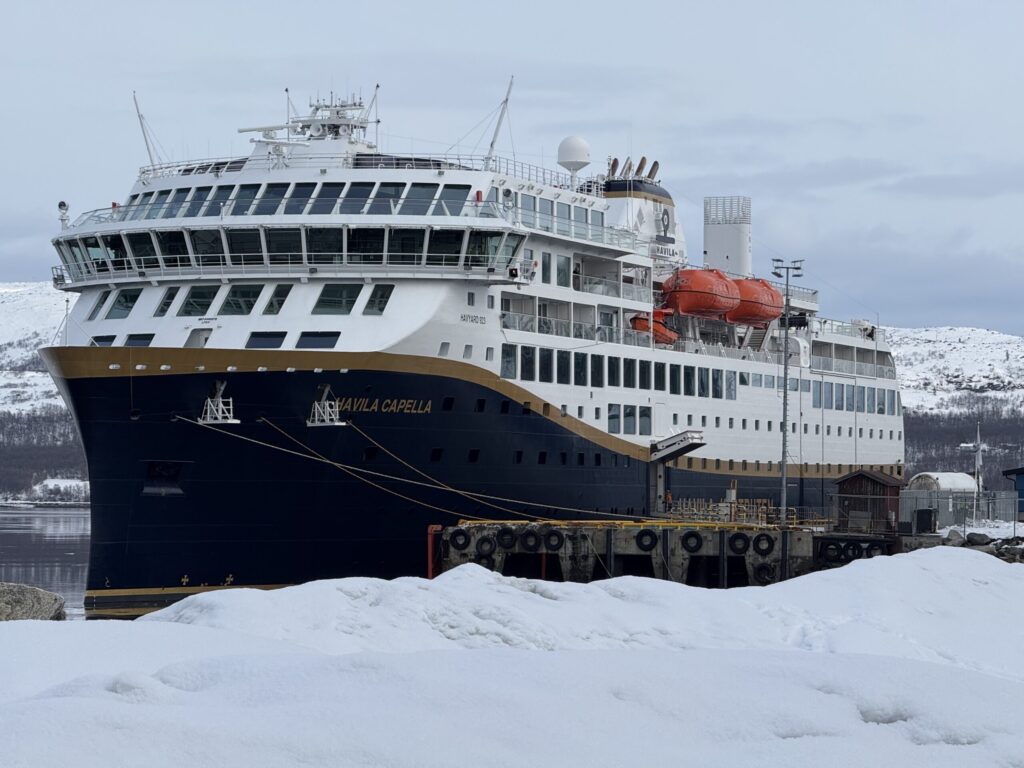
So we found a compromise: the Bergen–Kirkenes Postal Route. Not quite a cargo ship, not quite a cruise—just a working (but comfortable) vessel that makes 77 stops along Norway’s coast over 12 days.
Fine meals. Calm seas. A quiet rhythm. It worked.
Most days, we stared out the windows or bundled up on deck, watching fjords drift by. One night, we caught the Northern Lights—just us and the sky. It felt like nature showing off.
And it was cold. Colder than anything we’ve experienced in ten years. The Arctic in March doesn’t mess around.
Still, it felt like sailing through a slideshow of postcards—each view more breathtaking than the last.
Amsterdam, Netherlands
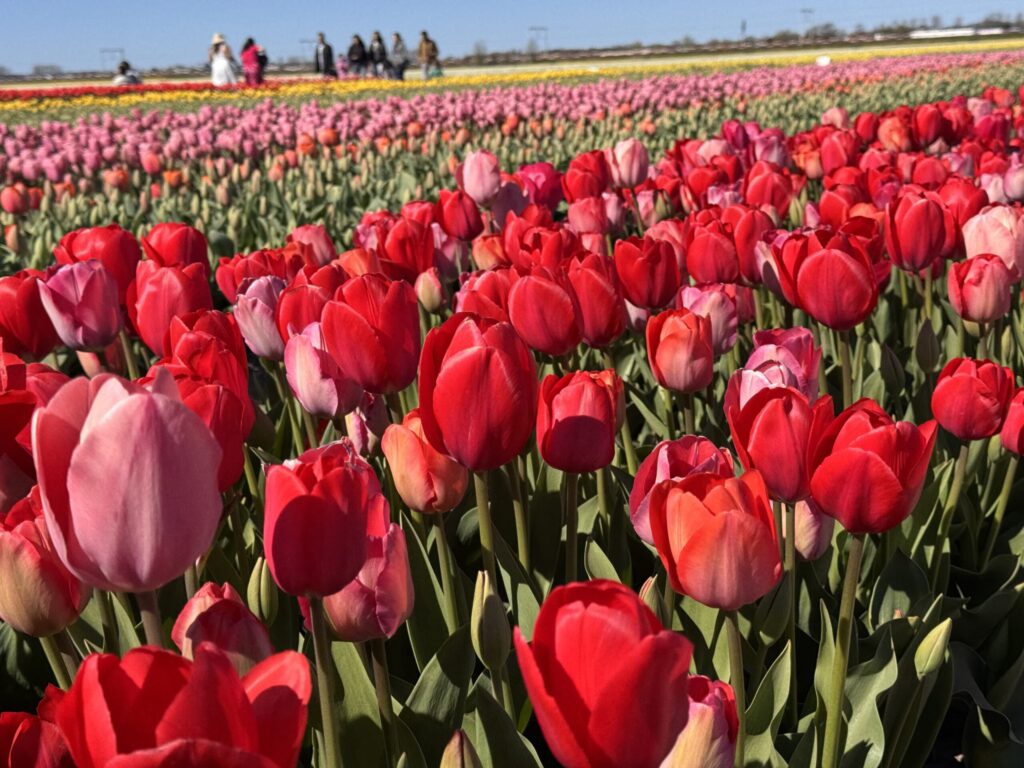
We came for the tulips.
Even as a non-flower guy, I have to admit—they’re spectacular. The scale. The color. The precision. It’s where science meets art and explodes into a riot of beauty.
Totally worth it.
The rest of Amsterdam delivered, too—cool in April but fun. Lisa did a deep dive into the art museums. She hit them all. I wandered neighborhoods instead, watching how people actually live. The rituals. The rhythms. I never get tired of that.
We took day trips to Haarlem and Leiden—both smaller, more relaxed, and more manageable than the beautiful chaos of Amsterdam’s center.
Because, let’s be honest, the center is mostly a tourist zone. Charming, yes. But it often feels more like a theme park than a functioning city. The canals, the shops, the sex workers in their neon-lit windows—it’s built for the visitor, not the resident.
And while those sex workers may have looked warm in their little glass booths, I was freezing just walking past.
The real Amsterdam is outside the center. It’s diverse. The neighborhoods shift. The cuisines represent the whole world. And from what I could see, people are doing well.
The Netherlands feels solid. Like a place where things work and people don’t fall through the cracks. If you can handle the weather, it looks like a good life.
We really enjoyed our time there—tulips, tourists, and all.
Cyprus
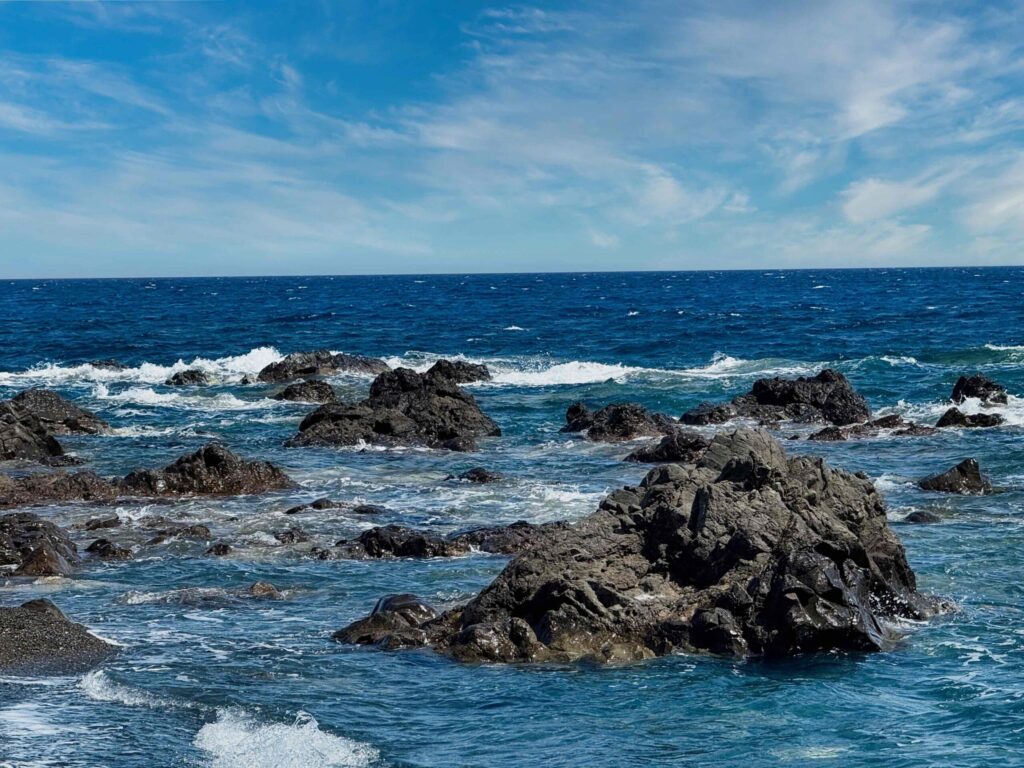
In Cyprus, we rented an Airbnb just 50 feet from the water—in a tiny village perched next to the Mediterranean.
Our host told us you couldn’t build that close to the sea today. Not legally, anyway. From the patio, we could hear the waves crash, toss rocks into the surf, and watch the sun disappear into the water each night.
Quiet. Stunning. Exactly what we needed after a stretch of nonstop movement.
The village was barely a dot—one restaurant for breakfast and lunch, another that opened for dinner. We could’ve driven to bigger cities. A few times, we did. But mostly we stayed put.
There’s something deeply restorative about being still—especially when your view is that good.
But the scenery wasn’t the whole story. It was the people.
Sit down for a meal, and the owner might pull up a chair, start chatting, and pour you a drink—on the house, naturally. At one point, I had someone rubbing my shoulders mid-conversation while telling his grandfather’s life story.
It’s that kind of place.
And it makes sense when you look at the map. Cyprus is within arm’s reach of Jerusalem, Lebanon, Syria, and Turkey. That whole corner of the world shares a cultural thread: hospitality as a core value.
They feed you. Embrace you. Treat you like family. It’s not a performance—it’s just who they are.
We didn’t do much in Cyprus.
We didn’t need to.
The ocean, the sunsets, the warmth—both literal and emotional—were more than enough.
Malta
Malta was… fine.
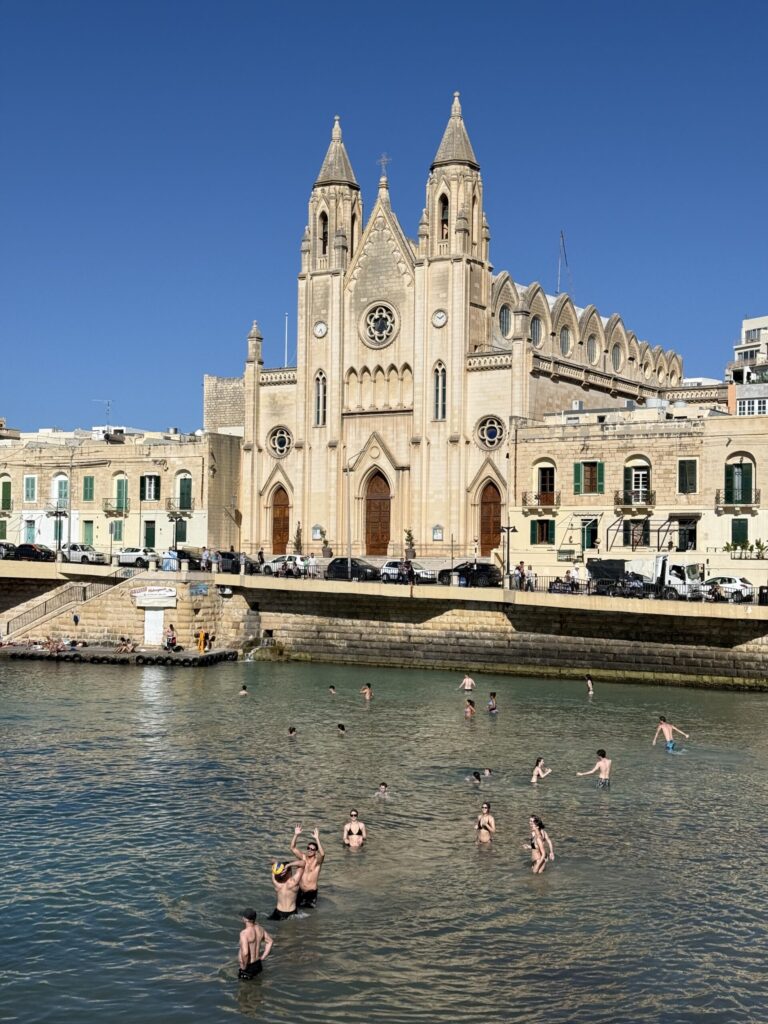
The coastline stole the show—rugged and cinematic, with ancient forts and stone buildings clinging to the cliffs. The island took a beating in World War II, and much of what stands today is a mix of weathered resilience and careful reconstruction. It looks important. Sometimes it even feels that way.
But for us, the experience felt muted.
We spent our days wandering the old city, dodging cruise ship crowds, looking at buildings that probably deserved more attention than we could give. It was peak season, and the streets heaved with tour groups—umbrellas raised, guides shouting facts we mostly tuned out.
The food? Serviceable. A little bit of everything, not much that stood out. Malta seems to cater to everyone and, in doing so, loses some of its own flavor.
Still, the people-watching was next-level. Malta might have the highest concentration of beautiful humans we’ve encountered in a while—beachfront workouts, swimwear ad campaigns in motion. It was almost distracting.
And that kind of sums it up.
Not every place has to knock you sideways. Some places just… are. And that’s okay.
Rome
By now, we’ve earned the right to do Rome differently.
No itinerary. No reservations. Just wandering. A church here. A ruin there. A quick espresso. A long pause. Nothing to chase. Nothing to prove.
Rome rewards that kind of exploration. There’s something to see around every corner. Usually several things. Sometimes 3,000 years’ worth—stacked, layered, crumbling and alive.
This time, the city felt charged in a different way.
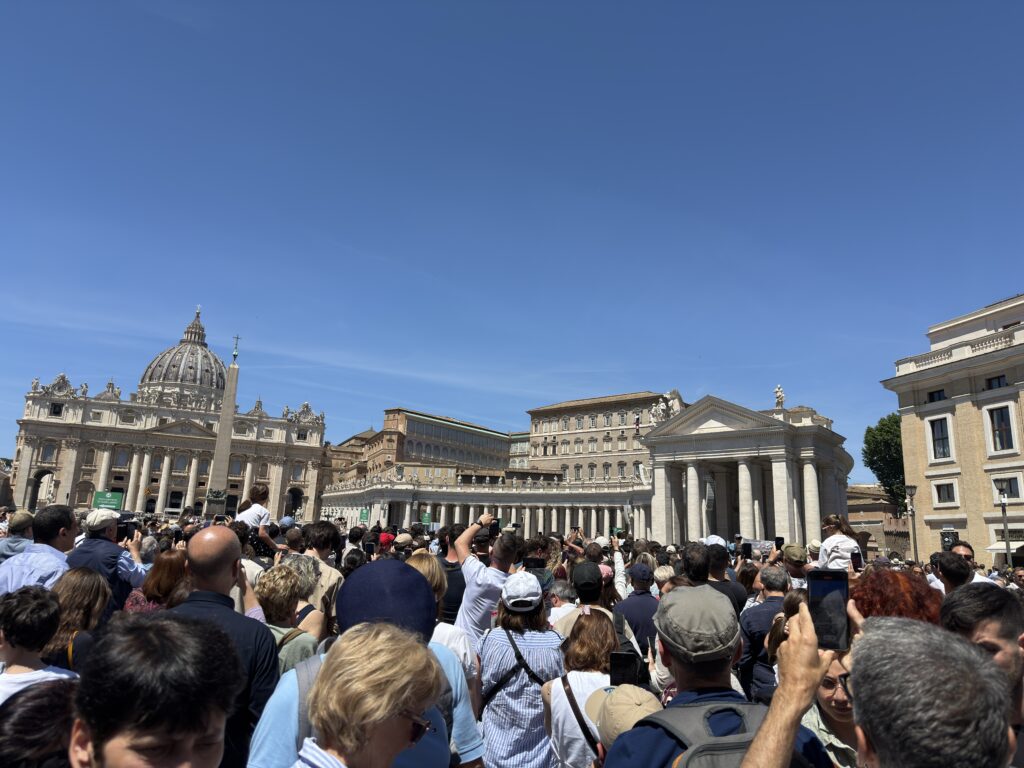
The Vatican’s Jubilee year had just begun, and security was tighter than usual. The machine-gun patrols weren’t new—but the posture had shifted. More alert. Less ceremonial. Our hotel, around the corner from the presidential palace, came with extra barriers and a constant reminder that Rome was being a bit more vigilant than usual.
But it wasn’t just tension in the air. It was something else too—something older. Deeper.
On Sunday morning, we joined the crowd in St. Peter’s Square as Pope Leo delivered the Angelus. The square, always busy, was overflowing—packed with prayer, fervor, and unshakeable faith. There was joy in the crowd. A kind of reverence that pulsed through the space.
Earlier that day, we visited the tomb of Pope Francis. Just a simple space. Quiet. Humble. Unadorned. And yet—moving.
Rome holds contradictions better than most cities. Power and humility. Noise and stillness. Chaos and calm.
You don’t have to do Rome every time. Sometimes it’s enough to be there—present, wandering, letting the layers of history and faith find you.
Slovenia
Slovenia’s been on our list for a while.
Compact. Green. Often overlooked.
The driver of our taxi from the airport wouldn’t stop talking. Not in an annoying way. In the way someone talks about their child who just aced the violin recital and then baked a perfect lemon cake. He was proud. Giddy, even. He told us—with no prompting—how clean it is here, how safe, how beautiful. The food. The cakes. The people. On and on. I half expected him to pull out a slideshow.
We didn’t argue.
Out the window: spotless streets, no trash, no grime. Just neat rows of buildings with stories to tell and the Julian Alps looming behind them like stern but loving grandparents.
Those snow-capped peaks aren’t just a backdrop. They’re a presence. They rise in the distance, quiet and massive, as if to remind you that yes, this is still Europe—but it’s a different kind. One where nature hasn’t been paved over or pushed out. It’s integrated. Part of the rhythm.
Ljubljana is a city with everything you’d expect from a European capital. Cobbled streets. Baroque facades. A castle that keeps watch from above. The river runs through the center, lined with cafes that spill out onto sunny terraces. It’s a city that invites you to slow down—grab a pastry, watch the boats glide by, and realize that maybe you’re in no rush after all.
And the food? It suits the place. Sure, there are Michelin-starred spots and famous chefs if you’re looking for them. But what really shines here is the food that feels like it belongs to the place: hearty, simple, satisfying. Beef goulash that fills you up and makes you feel like you’re sitting around a family table. Plates of dumplings—layered pastries, really—stuffed with sweet or savory fillings, each one a warm, flaky surprise. The restaurants have the same spirit: no pretension, no endless tasting menus, just good cooking that leaves you feeling taken care of.
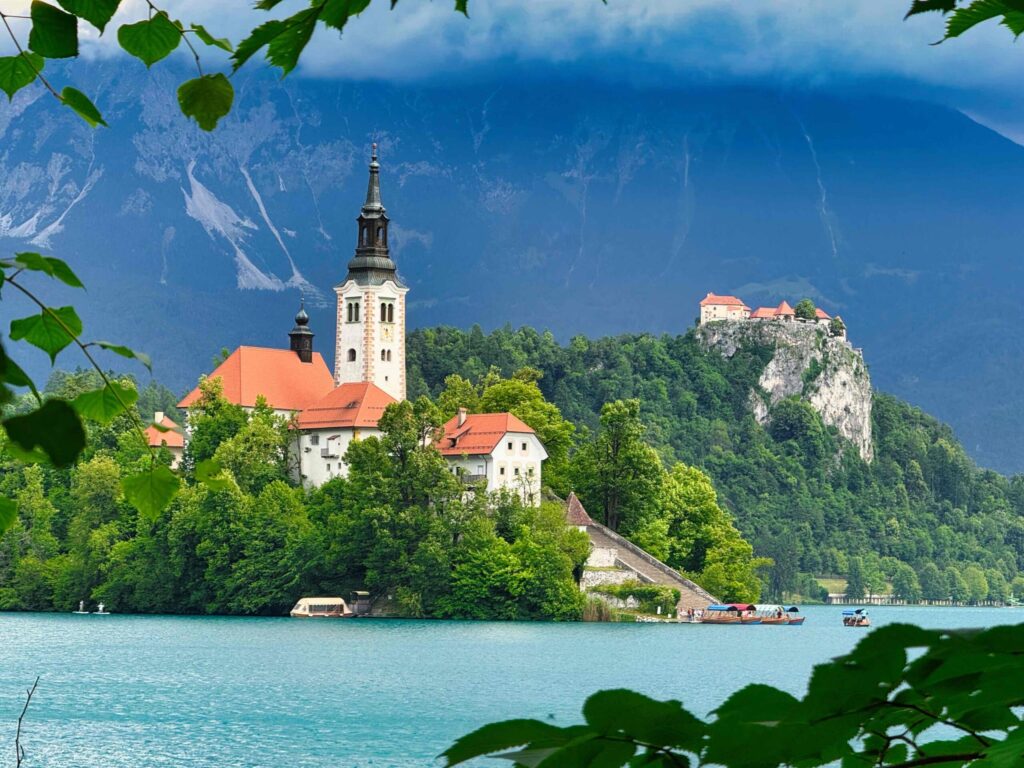
It’s all so close, too. Lake Bled is just a short ride away—an island church, a castle perched on a cliff, and mountains that rival anything you’d find in Switzerland or Austria. The lake is touristy, of course, but not overwhelmed. Step off the main road and you’re alone, breathing in the pine-scented air, listening to the quiet. Further out, the mountains get bigger and bolder, clawing their way into the sky. It’s the kind of scenery that humbles you, that makes you feel small in the best way.
Back in the city, everything feels like it fits together—nature, food, and urban life in easy harmony. A city that’s self-contained and easy to navigate. No endless traffic jams, no chaos. Just a nicely balanced mix of elements—inviting you in, not showing off, but proud to share.
Slovenia doesn’t shout. It doesn’t need to. It charms. It's the perfect place for us to close out another year of travel.
Wrapping It Up
Ten years in, this life still surprises us. We plan, but plans evolve. We chase novelty, but we also revisit the familiar. And through it all, we keep finding new ways to see the world—and ourselves.
We still don’t have a master plan. We never did. We just kept moving—toward whatever felt like the next right place.
What we found along the way wasn’t just new cities or countries—it was a new version of ourselves. One shaped by motion, made resilient by constant change, and still endlessly curious.
If the people we were in year one could meet us now, I think they'd be a little shocked. We adapt faster. We let go more easily. We laugh more when things go sideways. The road didn’t just take us places. It changed the way we move through all of them.
So we’ll keep going. Not because we know where it leads, but because the not-knowing is half the point.
Here’s to another year of wandering, wondering, and maybe—just maybe—fewer bouts of food poisoning.